
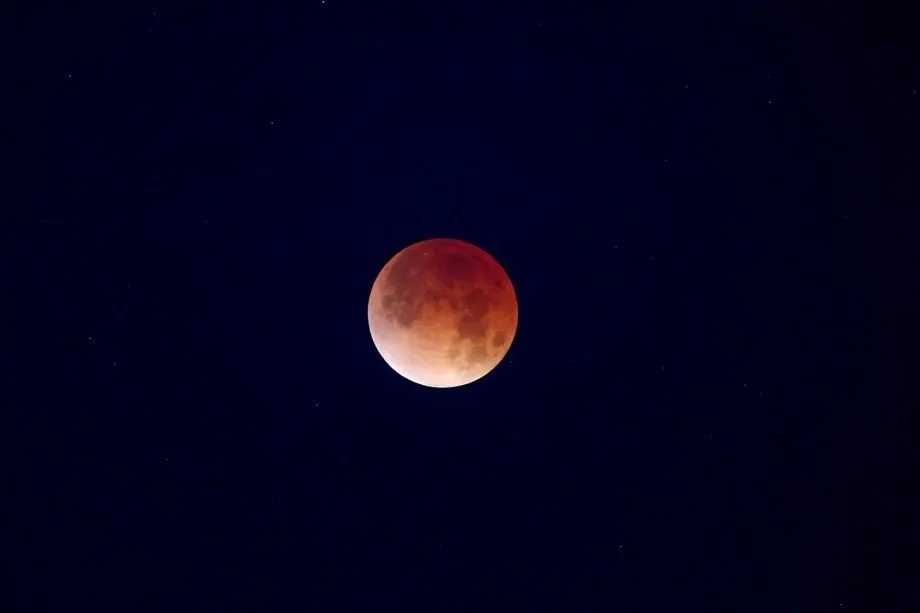
A closer look at Lunar eclipse
Earth casts a shadow into space, and the full Moon can pass through it.
During totality, sunlight refracted through Earth’s atmosphere reaches the lunar surface. The atmosphere preferentially scatters shorter wavelengths, often leaving a coppery glow.
Observers across much of Earth’s night side can share the same lunar eclipse. Their local clock times and the Moon’s altitude vary.
NASA · Eclipses and the Moon · Lunar Eclipses and Solar Eclipses | NASA Space Place – NASA Science for Kids · Danjon scale on Wikipedia
Want to learn more about Lunar eclipse? Lunar eclipse on Wikipedia.