

LIBRE TELESCOPE
Menu
Book Event

Sky Guide

The full Moon

Quick Stats

Name:
The full Moon
Type:
Event
Observability:
Naked eye
Rarity:
Very common · About every 29.5 days
Date of last occurrence:
Nov 24, 2026
Date of next occurrence:
Dec 24, 2026
Date of occurrence after that:
Jan 22, 2027
Best telescope for viewing:
Celestron Cometron 7×50 binoculars — for a full-disk view of the Moon. Its phase and broad shading are visible by eye.

Full phase · UT · Calendar reference: November 28, 2026.

How to view The full Moon

  1. Choose a local session

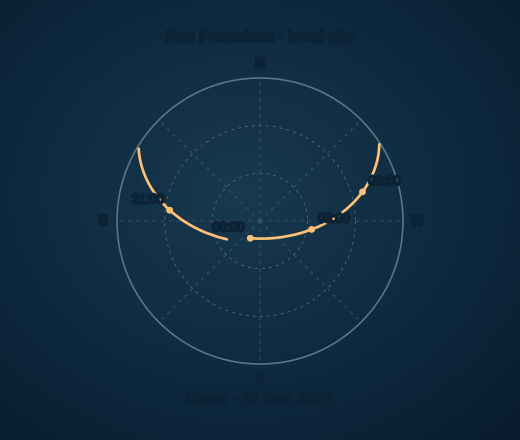
    Night of December 23–24, 2026. Look up local moonrise and moonset for your West Coast city. The date of the exact phase or orbital extreme in UT may differ from the local date.

  2. Frame the whole disk

    Start with the entire lunar disk in view. Use a time well above the horizon to reduce the effects of atmospheric distortion.

  3. Compare the detail

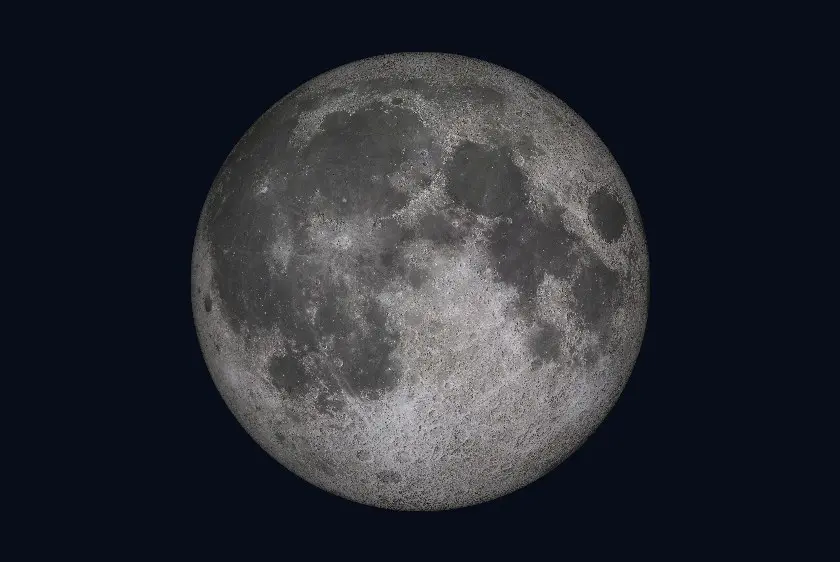
    Trace bright crater rays across the darker maria. Compare this full Moon view with the same terrain near first quarter.

Best telescope for viewing The full Moon: Celestron Cometron 7×50 binoculars — for a full-disk view of the Moon. Its phase and broad shading are visible by eye. on Amazon

A closer look at The full Moon

At full Moon the Sun and Moon lie on opposite sides of the sky. The Moon ordinarily rises near sunset, and the illuminated hemisphere faces Earth almost directly.

The December 2026 full Moon falls on the same UT date as lunar perigee. A photograph at a fixed focal length can show its larger apparent diameter when compared with a more distant full Moon.

Look for bright ejecta rays spreading from Tycho and other young craters. Near full phase, differences in surface brightness stand out while most central terrain casts very short shadows.