
A closer look at Apsidal precession
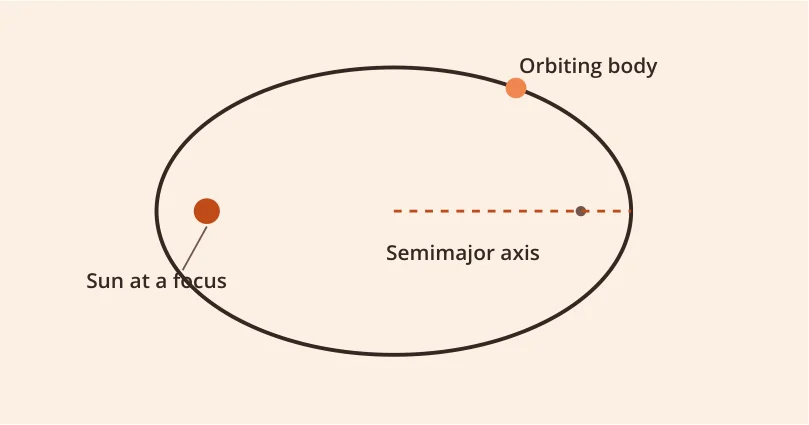
Apsidal precession turns an orbit’s long axis over time.
Nearby masses, the central body’s nonspherical gravity, or general relativity can contribute. The object can complete many revolutions while its periapsis direction drifts slowly. A secular resonance occurs when slow precession rates match in a way that allows perturbations to accumulate.
Mercury’s measured perihelion advance contains contributions from other planets. The smaller residual advance became a famous test of general relativity.
Want to learn more about Apsidal precession? Apsidal precession on Wikipedia.