

LIBRE TELESCOPE
Menu
Book Event

Sky Guide

Mercury

Quick Stats

Name:
Mercury
Type:
Object
Observability:
Naked eye
Best telescope for viewing:
Celestron NexStar 127SLT Maksutov — for Mercury’s small phase in twilight, with the Sun below the horizon.

How to view Mercury

  1. Choose a twilight horizon

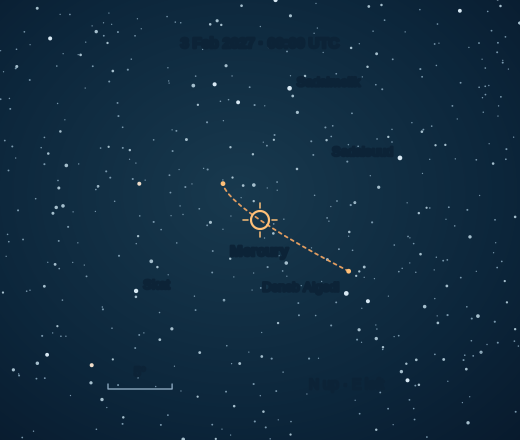
    Try January 30–February 6, 2027. Look west after sunset with the Sun completely below the horizon. Check the local times for your Pacific Coast city.

  2. Identify the planet

    Use the local-time chart to identify Mercury by eye before centering it in a finder. A clear view low on the horizon matters.

  3. Look for the phase

    Wait until the Sun has completely set before looking with binoculars.

Best telescope for viewing Mercury: Celestron NexStar 127SLT Maksutov — for Mercury’s small phase in twilight, with the Sun below the horizon. on Amazon

A closer look at Mercury

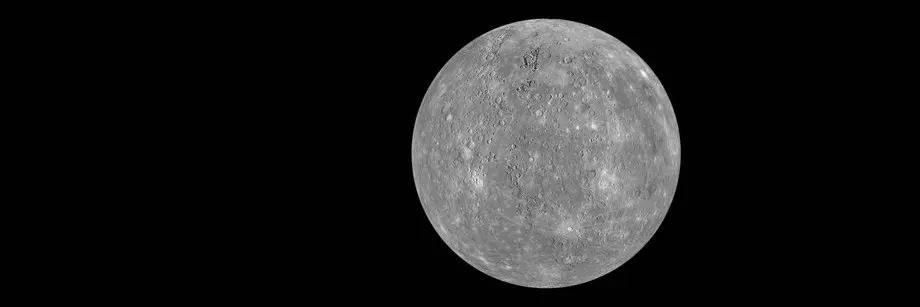
Mercury spends much of its time lost in twilight. When its orbit carries it far enough to one side of the Sun, it briefly becomes a naked-eye target.

The planet completes a year in about 88 Earth days. A single evening appearance offers a short opportunity to follow its changing position against the horizon.

Choose an unobstructed western horizon for an evening appearance. Wait until the Sun has completely set before looking with binoculars.

Want to learn more about Mercury? Mercury (planet) on Wikipedia.