
A closer look at Secular resonance
A secular resonance occurs when slow precession rates match in a way that allows perturbations to accumulate.
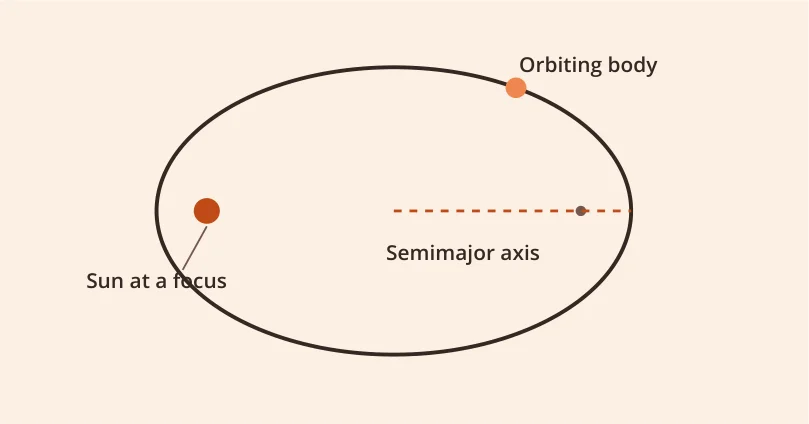
It involves the gradual orientations of orbits and differs from a simple commensurability of orbital periods. Apsidal precession turns an orbit’s long axis over time.
An asteroid can experience a long-term increase in eccentricity even without repeatedly passing close to a planet. The changing orientation of its orbit carries the clue. For the surrounding ideas, see Orbital perturbation.
Want to learn more about Secular resonance? Secular resonance on Wikipedia.