

LIBRE TELESCOPE
Menu
Book Event

Sky Guide

A total lunar eclipse

Quick Stats

Name:
A total lunar eclipse
Type:
Event
Observability:
Naked eye
Rarity:
Common · Roughly every 1–2 years worldwide
Date of last occurrence:
Mar 3, 2026
Date of next occurrence:
Dec 31, 2028
Date of occurrence after that:
Jun 26, 2029
Best telescope for viewing:
Celestron Cometron 7×50 binoculars — for a full-disk view of the Moon. Its phase and broad shading are visible by eye.

Date of greatest eclipse · UT · Calendar reference: November 28, 2026.

How to view A total lunar eclipse

  1. Check local moonrise and moonset

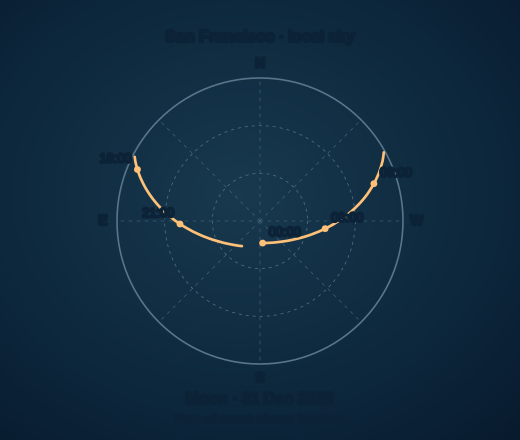
    From Los Angeles, the December 31, 2028 Moon sets during the penumbral phase. Seattle can see a partial phase before moonset. Seeing totality requires a different location or a remote view.

  2. Frame the whole Moon

    Begin with the full disk in a binocular field. Ordinary binoculars are suitable for observing a lunar eclipse.

  3. Compare the shadow

    A lunar eclipse is safe to enjoy by eye or through an ordinary telescope.

Best telescope for viewing A total lunar eclipse: Celestron Cometron 7×50 binoculars — for a full-disk view of the Moon. Its phase and broad shading are visible by eye. on Amazon

A closer look at A total lunar eclipse

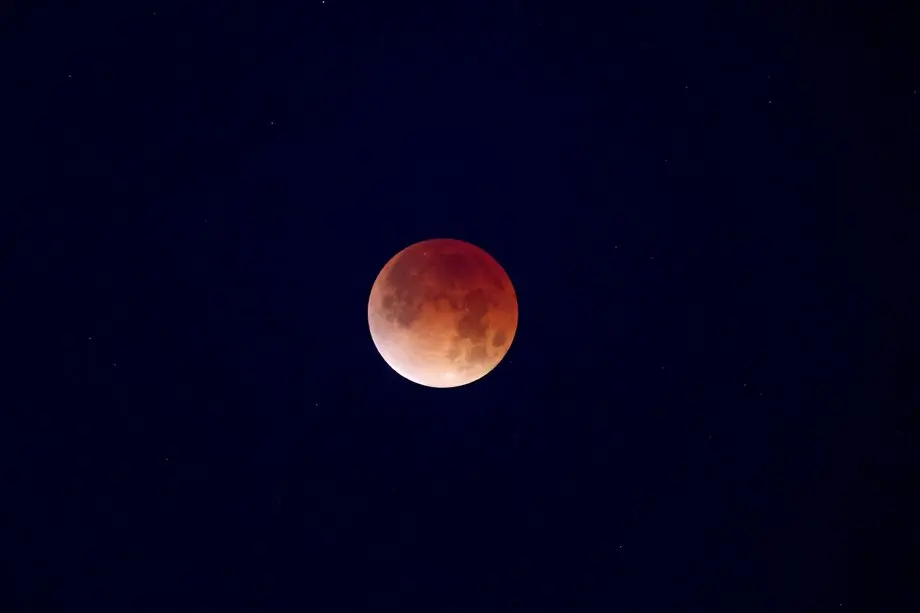
During a total lunar eclipse the entire Moon enters Earth’s darkest shadow. Seen from the Moon, Earth would cover the face of the Sun.

Sunlight skimming the edges of Earth’s atmosphere still reaches the Moon. The atmosphere scatters shorter wavelengths more readily, giving the lunar surface its copper or red tint.

Watch how the color changes across the disk. A lunar eclipse is safe to enjoy by eye or through an ordinary telescope.

Want to learn more about a total lunar eclipse? Lunar eclipse on Wikipedia.