

LIBRE TELESCOPE
Menu
Book Event

Sky Guide

A penumbral lunar eclipse

Quick Stats

Name:
A penumbral lunar eclipse
Type:
Event
Observability:
Naked eye
Rarity:
Common · Roughly every 1–2 years globally, irregular
Date of last occurrence:
Mar 25, 2024
Date of next occurrence:
Feb 20, 2027
Date of occurrence after that:
Jul 18, 2027
Best telescope for viewing:
Celestron Cometron 7×50 binoculars — for a full-disk view of the Moon. Its phase and broad shading are visible by eye.

Greatest eclipse · UT · Calendar reference: November 28, 2026.

How to view A penumbral lunar eclipse

  1. Check local moonrise and moonset

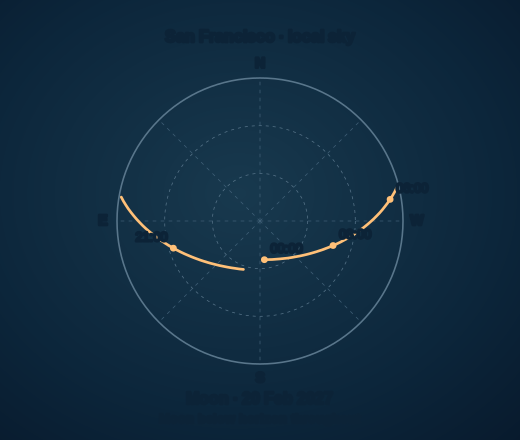
    At the February 20, 2027 maximum the Moon is below the horizon on the U.S. West Coast. Check a city-specific moonrise table for any final phase, or use a broadcast from farther east.

  2. Frame the whole Moon

    Begin with the full disk in a binocular field. Ordinary binoculars are suitable for observing a lunar eclipse.

  3. Compare the shadow

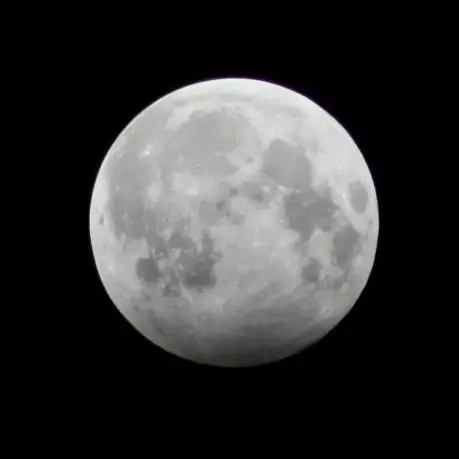
    Compare brightness from one limb to the other to find the shadow without an obvious sharp edge.

Best telescope for viewing A penumbral lunar eclipse: Celestron Cometron 7×50 binoculars — for a full-disk view of the Moon. Its phase and broad shading are visible by eye. on Amazon

A closer look at A penumbral lunar eclipse

Earth’s penumbra is the region where our planet covers only part of the Sun as seen from the Moon. During a purely penumbral eclipse, sunlight still reaches every part of the visible lunar disk.

The February 2027 passage is deep enough to produce a soft gradient. The following July event barely clips the penumbra and will be extraordinarily difficult to distinguish by eye.

Photograph the full Moon before maximum and again at greatest eclipse using identical settings. Compare brightness from one limb to the other to find the shadow without an obvious sharp edge.

Want to learn more about a penumbral lunar eclipse? Lunar eclipse on Wikipedia.