

LIBRE TELESCOPE
Menu
Book Event

Sky Guide

A transit of Mercury

Quick Stats

Name:
A transit of Mercury
Type:
Event
Observability:
Intermediate
Rarity:
Rare · About 13 times per century
Date of last occurrence:
Nov 11, 2019
Date of next occurrence:
Nov 13, 2032
Date of occurrence after that:
Nov 7, 2039
Best telescope for viewing:
Celestron EclipSmart 50 mm dedicated white-light solar telescope — for the silhouette crossing the solar disk. Keep the built-in solar filter in place throughout.

Transit date · UT · Calendar reference: November 28, 2026.

How to view A transit of Mercury

  1. Check the visibility map

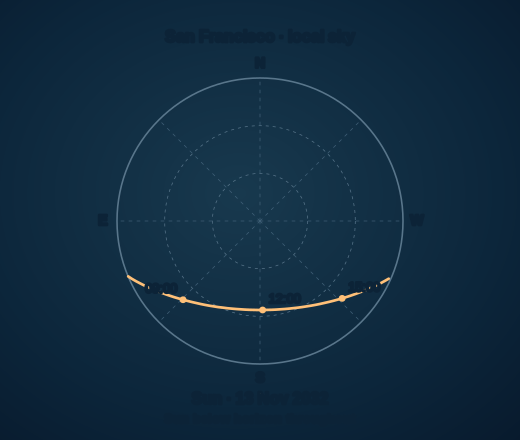
    The November 13, 2032 transit takes place while the Sun is below the U.S. West Coast horizon. Choose a remote feed from a sunlit location or use archived observations.

  2. Prepare solar-safe optics

    Use a dedicated solar telescope or a purpose-built solar filter securely fitted over the full front aperture. Keep the filter fitted for the entire transit. Eclipse glasses do not make an unfiltered telescope safe.

  3. Follow the silhouette

    Note where the dark circle enters and exits the solar disk. Compare the recorded contact times with the prediction for the observing location.

Best telescope for viewing A transit of Mercury: Celestron EclipSmart 50 mm dedicated white-light solar telescope — for the silhouette crossing the solar disk. Keep the built-in solar filter in place throughout. on Amazon

A closer look at A transit of Mercury

Mercury circles the Sun in just 88 days, but usually passes above or below it from our point of view. A transit happens when Mercury also crosses the plane of Earth’s orbit at the right moment. From Earth, these alignments currently happen only in May or November.

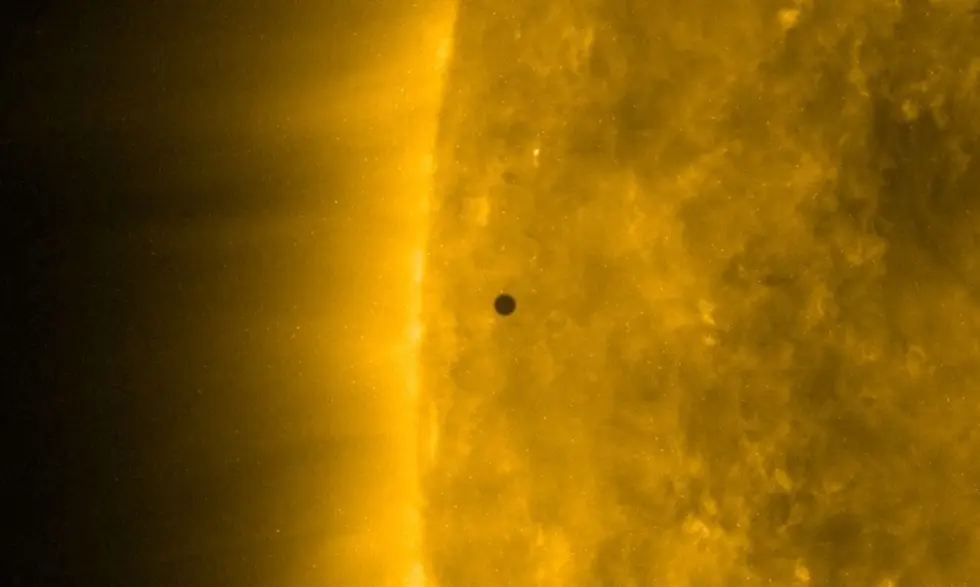
At a properly filtered telescope, the first surprise is how small Mercury looks against the Sun. Make a quick sketch, then return ten minutes later. The little round dot has moved. In November 2019 it took about five and a half hours to cross the solar disk, enough time to follow a whole world along its orbit.

For the 2032 transit, a daytime site such as Cairo offers a much longer watch than eastern Newfoundland, where the end comes soon after sunrise. Have a trained observer set up a dedicated solar telescope or a secure front-mounted solar filter. Keep the filter in place throughout. Eclipse glasses alone cannot be used at an unfiltered eyepiece. A chart of the celestial sphere helps translate an event’s position into a direction from your observing site.

Want to learn more about a transit of Mercury? Transit of Mercury on Wikipedia.