

LIBRE TELESCOPE
Menu
Book Event

Sky Guide

A total solar eclipse

Quick Stats

Name:
A total solar eclipse
Type:
Event
Observability:
Naked eye
Rarity:
Common · About every 18 months globally
Date of last occurrence:
Aug 12, 2026
Date of next occurrence:
Aug 2, 2027
Date of occurrence after that:
Jul 22, 2028
Best telescope for viewing:
Celestron EclipSmart 50 mm dedicated white-light solar telescope — for a magnified view during the partial phases. For direct unaided viewing, use ISO 12312-2 eclipse viewers.

Total eclipse date · UT · Calendar reference: November 28, 2026.

How to view A total solar eclipse

  1. Check the eclipse path

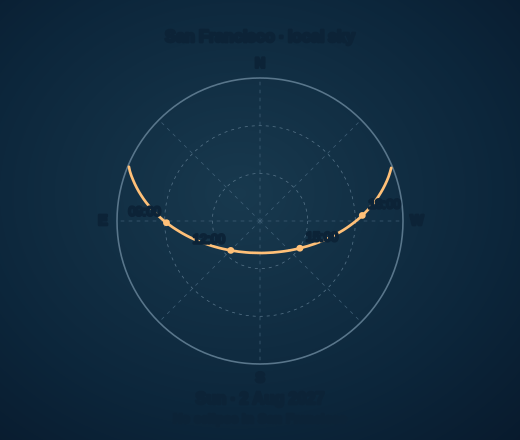
    The total eclipse on August 2, 2027 misses the U.S. West Coast. For totality, consult the central track through southern Spain and North Africa or follow an observatory broadcast.

  2. Choose the viewing method

    Use pinhole projection onto a screen, or an undamaged ISO 12312-2 solar viewer for unaided viewing of the bright solar disk. Never look through the pinhole.

  3. Protect magnified views

    Use a dedicated solar instrument or a purpose-built filter secured over the front of the optics. Keep it fitted. Ordinary eclipse glasses do not protect an eye behind unfiltered binoculars or telescopes.

Best telescope for viewing A total solar eclipse: Celestron EclipSmart 50 mm dedicated white-light solar telescope — for a magnified view during the partial phases. For direct unaided viewing, use ISO 12312-2 eclipse viewers. on Amazon

A closer look at A total solar eclipse

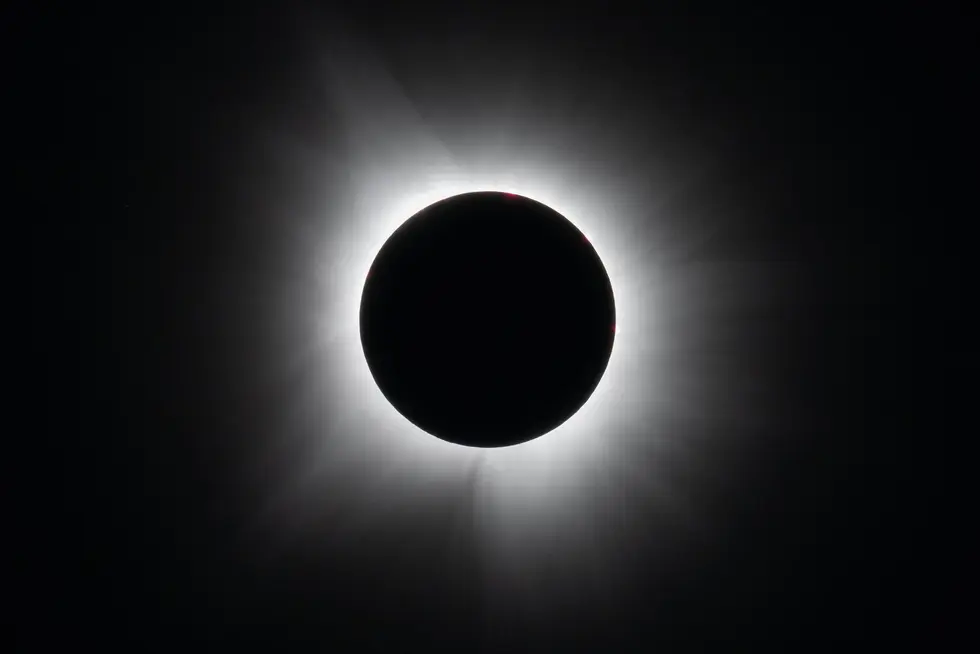
The Sun is vastly larger than the Moon, yet from Earth the two disks can appear almost exactly the same size. When the Moon covers the Sun’s bright face, the sky darkens and the corona comes into view. Its pale streamers trace the Sun’s outer atmosphere.

Where you stand determines what you see. On August 2, 2027, the Moon’s shadow crosses a narrow strip through parts of southern Europe, Africa and the Arabian Peninsula. Luxor, Egypt, gets a little over six minutes of totality. A town outside the strip sees only a partial eclipse, even on the same clear afternoon.

Use ISO 12312-2 solar viewers during every partial phase. Only inside the path, once the bright face is completely covered, can you remove them. Put them back on as soon as the first bright edge returns. For binoculars or a telescope, use a solar filter designed for the front of the instrument. Eclipse glasses alone cannot protect an eye at the eyepiece. A chart of the celestial sphere helps translate an event’s position into a direction from your observing site.

Want to learn more about a total solar eclipse? Solar eclipse on Wikipedia.