

LIBRE TELESCOPE
Menu
Book Event

Sky Guide

A partial lunar eclipse

Quick Stats

Name:
A partial lunar eclipse
Type:
Event
Observability:
Naked eye
Rarity:
Common · Roughly every 1–2 years globally, irregular
Date of last occurrence:
Aug 28, 2026
Date of next occurrence:
Jan 12, 2028
Date of occurrence after that:
Jul 6, 2028
Best telescope for viewing:
Celestron Cometron 7×50 binoculars — for a full-disk view of the Moon. Its phase and broad shading are visible by eye.

Greatest eclipse · UT · Calendar reference: November 28, 2026.

How to view A partial lunar eclipse

  1. Check local moonrise and moonset

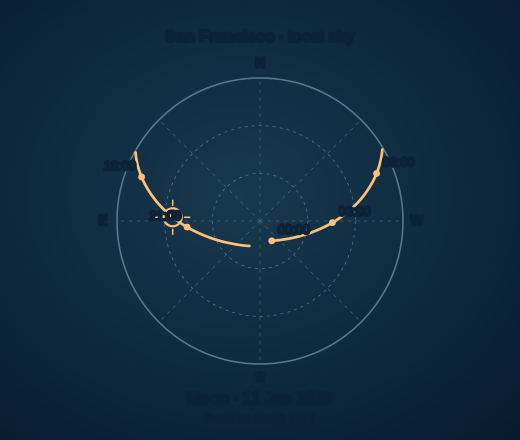
    In Pacific Standard Time, the January 12 UT eclipse reaches its greatest phase around 8:13 p.m. on January 11, 2028. Check that the rising Moon has cleared your eastern horizon.

  2. Frame the whole Moon

    Begin with the full disk in a binocular field. Ordinary binoculars are suitable for observing a lunar eclipse.

  3. Compare the shadow

    The local visibility map gives moonrise and moonset for individual cities.

Best telescope for viewing A partial lunar eclipse: Celestron Cometron 7×50 binoculars — for a full-disk view of the Moon. Its phase and broad shading are visible by eye. on Amazon

A closer look at A partial lunar eclipse

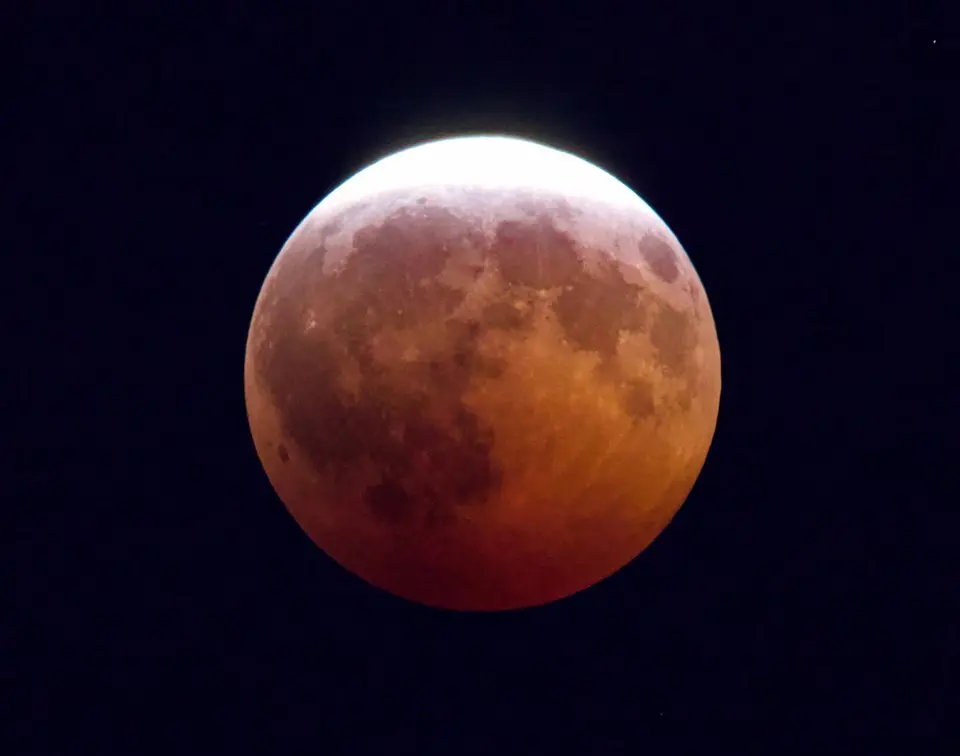
During a partial lunar eclipse only part of the full Moon enters Earth’s umbra, the darkest part of its shadow. A curved notch appears along the lunar limb.

The January 2028 event will be shallow. At greatest eclipse only about seven percent of the lunar diameter reaches the umbra, so the subtle notch is the feature to look for.

Watch before and after maximum and compare the shape of the dark edge. Binoculars can make the small intrusion easier to see. The local visibility map gives moonrise and moonset for individual cities.

Want to learn more about a partial lunar eclipse? Lunar eclipse on Wikipedia.