

LIBRE TELESCOPE
Menu
Book Event

Sky Guide

Mare Fecunditatis

Quick Stats

Name:
Mare Fecunditatis
Type:
Object
Observability:
Naked eye
Best telescope for viewing:
Celestron Cometron 7×50 binoculars — to trace the extent of the darker plain against the lunar highlands.

How to view Mare Fecunditatis

  1. Choose the illumination

    Try December 17–19, 2026, or the same lunar illumination in another month. For a West Coast site, check moonset and look while the feature is sunlit and the Moon is high.

  2. Locate the feature

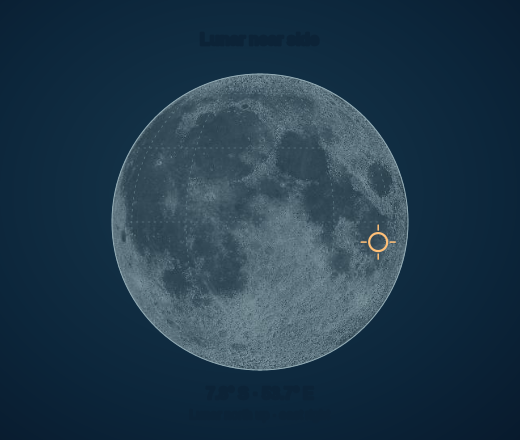
    On a lunar atlas, mark 7.8° S / 53.7° E. Orient the lunar disk in the finder, then move from the nearest broad dark plain or bright crater to Mare Fecunditatis.

  3. Study the detail

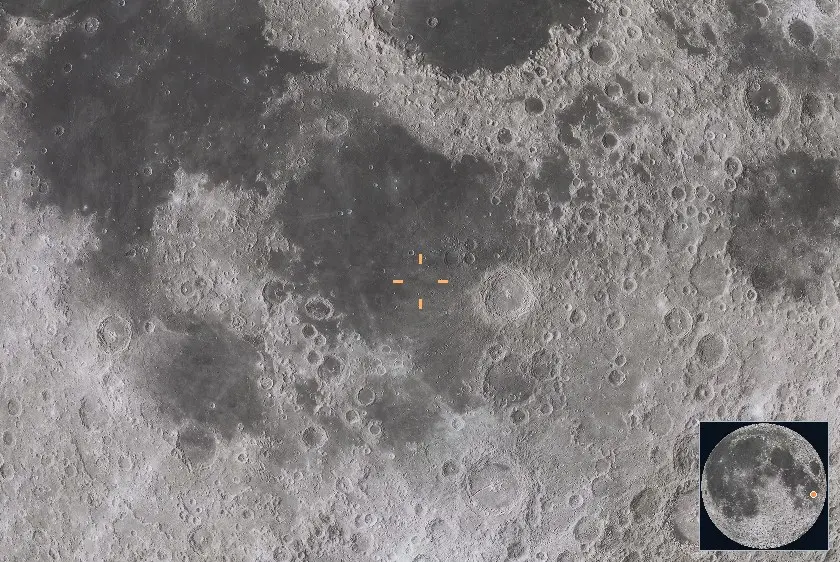
    At higher power, use a chart to find the little crater pair and look for the pale rays.

Best telescope for viewing Mare Fecunditatis: Celestron Cometron 7×50 binoculars — to trace the extent of the darker plain against the lunar highlands. on Amazon

A closer look at Mare Fecunditatis

The Sea of Fertility lies between Mare Tranquillitatis and the Moon’s eastern highlands. Across its plain, Messier and Messier A are associated with two striking streaks of bright ejecta.

The IAU catalogue gives 840 km for its extent. The center of the crater Langrenus is about 223 km to its east, measured along the lunar surface.

First identify the dark plain. At higher power, use a chart to find the little crater pair and look for the pale rays.