

LIBRE TELESCOPE
Menu
Book Event

Sky Guide

The Maia Nebula

NGC 1432

Quick Stats

Name:
The Maia Nebula (NGC 1432)
Type:
Object
Observability:
Difficult
Best telescope for viewing:
Sky-Watcher Classic 250P 10-inch Dobsonian — for broadband reflected starlight under a dark sky. Use a low-power eyepiece.

How to view NGC 1432

  1. Plan around meridian passage

    Try December 7–11, 2026. At its highest the field is about 80° above the horizon in Los Angeles and 67° in Seattle. Use your city’s meridian time for the best view.

  2. Find the field

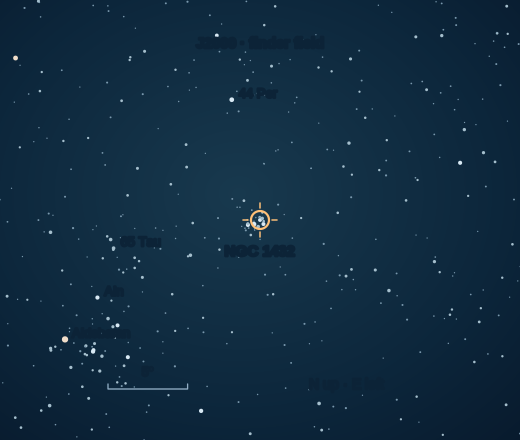
    On the north-up chart, start at Alcyone. The target lies about 28 arcminutes northwest of it. Match the surrounding stars before changing magnification.

  3. Check the identification

    The catalogued long axis is 60 arcminutes. Look to both sides of the illuminating star. Compare the haze there with the halo of another star of similar brightness.

Best telescope for viewing NGC 1432: Sky-Watcher Classic 250P 10-inch Dobsonian — for broadband reflected starlight under a dark sky. Use a low-power eyepiece. on Amazon

A closer look at NGC 1432

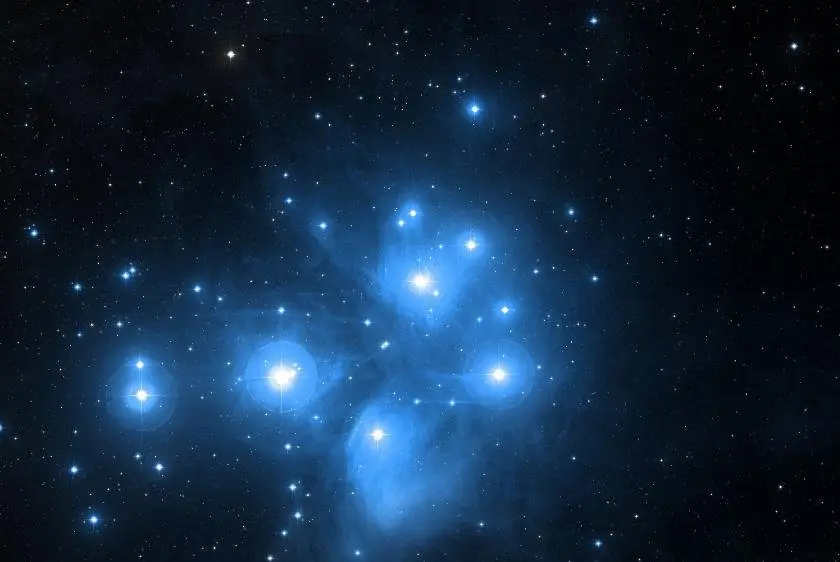
NGC 1432 is the reflection nebulosity around Maia in the Pleiades. Broad streaks show the structure of the scattering dust, which is illuminated by the nearby blue star.

OpenNGC lists NGC 1432 at 60.0′ by 40.0′. Use a dark, transparent sky. Broadband starlight reflected by dust responds differently from a hydrogen cloud when a narrow emission filter is inserted.

The target is about 28 arcminutes northwest of Alcyone. Match the orientation of your eyepiece to the chart before starting the hop. Begin with binoculars or a wide-field image to keep the edges in context.

Want to learn more about the Maia Nebula? Maia (star) on Wikipedia.