

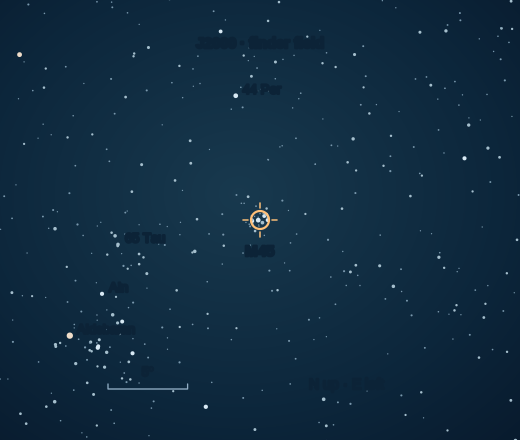
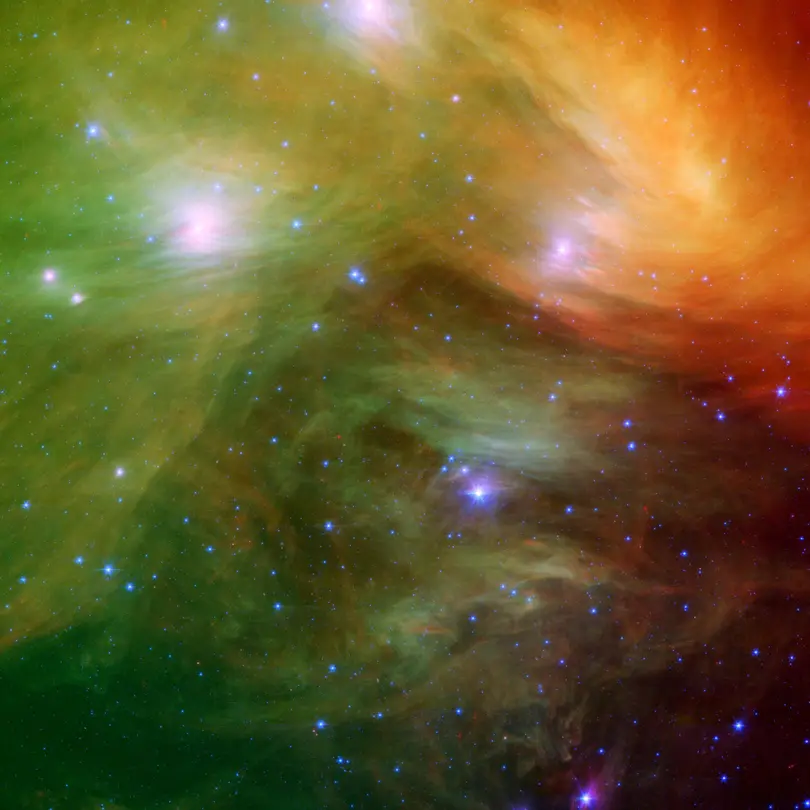
A closer look at M45
The Pleiades fit into a small patch of sky in Taurus. To many people the brightest stars resemble a tiny dipper. Try counting them before anyone tells you how many to expect. Five or six is a perfectly good count for a group nicknamed the Seven Sisters.
Those points really are neighbors. They belong to an open cluster whose stars formed together roughly 100 million years ago, when dinosaurs still lived on Earth. What looks like half a dozen stars from the backyard is the bright end of a much larger family.
Now lift a pair of binoculars. Fainter stars fill the gaps between the bright ones, and a wide field lets you keep the whole pattern in view. The gauzy material in photographs is dust in a cloud the cluster is passing through. In visible light, that dust reflects the blue light of the brightest stars. On a wide-field chart, Barnard’s Merope Nebula lies about 18 arcminutes from this target.