

LIBRE TELESCOPE
Menu
Book Event

Sky Guide

Kepler Crater

Quick Stats

Name:
Kepler Crater
Type:
Object
Observability:
Intermediate
Best telescope for viewing:
Celestron NexStar 127SLT Maksutov — for the outline and interior detail at moderate to high power.

How to view Kepler Crater

  1. Choose the illumination

    Try December 20–22, 2026 when the waxing-to-full Moon favors bright rays and albedo patterns. Check local moonrise and choose a time when the disk has climbed clear of the horizon.

  2. Locate the feature

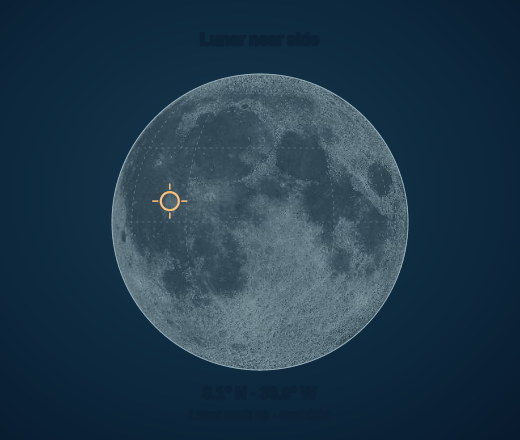
    On a lunar atlas, mark 8.1° N / 38.0° W. Orient the lunar disk in the finder, then move from the nearest broad dark plain or bright crater to Kepler Crater.

  3. Study the detail

    Try again closer to full Moon, when the ejecta stand out strongly.

Best telescope for viewing Kepler Crater: Celestron NexStar 127SLT Maksutov — for the outline and interior detail at moderate to high power. on Amazon

A closer look at Kepler Crater

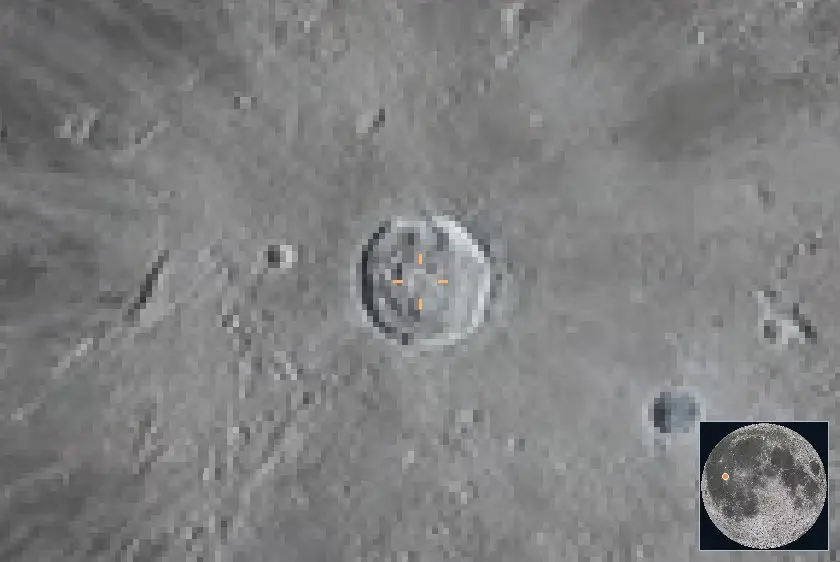
Kepler is a relatively small impact crater with an outsized system of pale rays. Its ejecta spread across the dark surface of Oceanus Procellarum.

On a north-up lunar map, the center of Copernicus lies about 539 km east of this feature. The crater measures about 29 km across.

Find the bright spot and follow individual rays into the mare. Try again closer to full Moon, when the ejecta stand out strongly.