

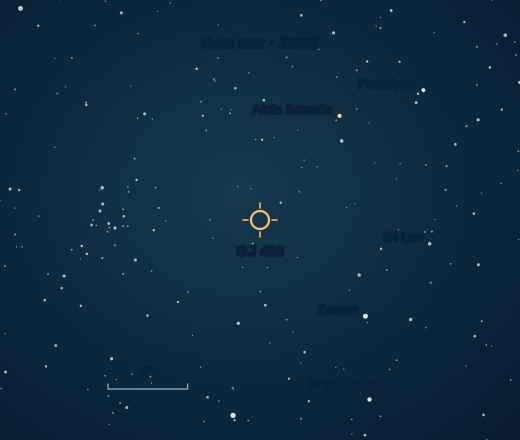
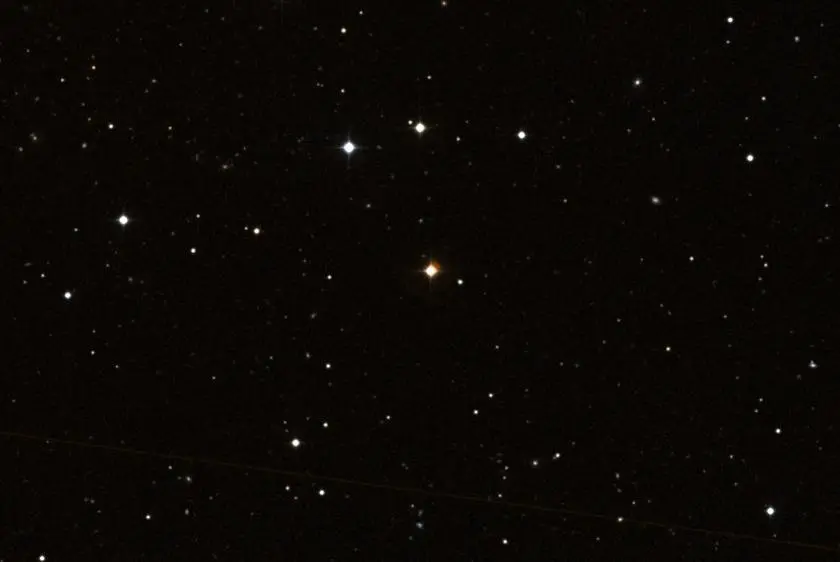
A closer look at GJ 436 b
This Neptune-sized planet follows an eccentric orbit around a red dwarf. Ultraviolet observations have revealed hydrogen escaping into an extended cloud around it.
The catalogue gives an orbital period of 2.64 days. A transit lasts about 1 hours and lowers the star’s measured light by roughly 0.68%. A stable comparison star helps separate that dip from changes in the sky.
The optical transit primarily measures the planet’s opaque disk. Its much larger gaseous surroundings show up differently when viewed at ultraviolet wavelengths.
NASA · planet archive · Host star on Wikipedia: Gliese 436 · Identifiers and catalog cross-references
Want to learn more about GJ 436 b? Gliese 436 b on Wikipedia.