

LIBRE TELESCOPE
Menu
Book Event

Sky Guide

The first-quarter Moon

Quick Stats

Name:
The first-quarter Moon
Type:
Event
Observability:
Naked eye
Rarity:
Very common · About every 29.5 days
Date of last occurrence:
Nov 17, 2026
Date of next occurrence:
Dec 17, 2026
Date of occurrence after that:
Jan 15, 2027
Best telescope for viewing:
Celestron Cometron 7×50 binoculars — for a full-disk view of the Moon. Its phase and broad shading are visible by eye.

First quarter · UT · Calendar reference: November 28, 2026.

How to view The first-quarter Moon

  1. Choose a local session

    Evening of December 17, 2026. Look up local moonrise and moonset for your West Coast city. The date of the exact phase or orbital extreme in UT may differ from the local date.

  2. Frame the whole disk

    Start with the entire lunar disk in view. Use a time well above the horizon to reduce the effects of atmospheric distortion.

  3. Compare the detail

    Follow the day–night boundary across the disk. Long shadows near local lunar sunrise reveal rims and mountain peaks.

Best telescope for viewing The first-quarter Moon: Celestron Cometron 7×50 binoculars — for a full-disk view of the Moon. Its phase and broad shading are visible by eye. on Amazon

A closer look at The first-quarter Moon

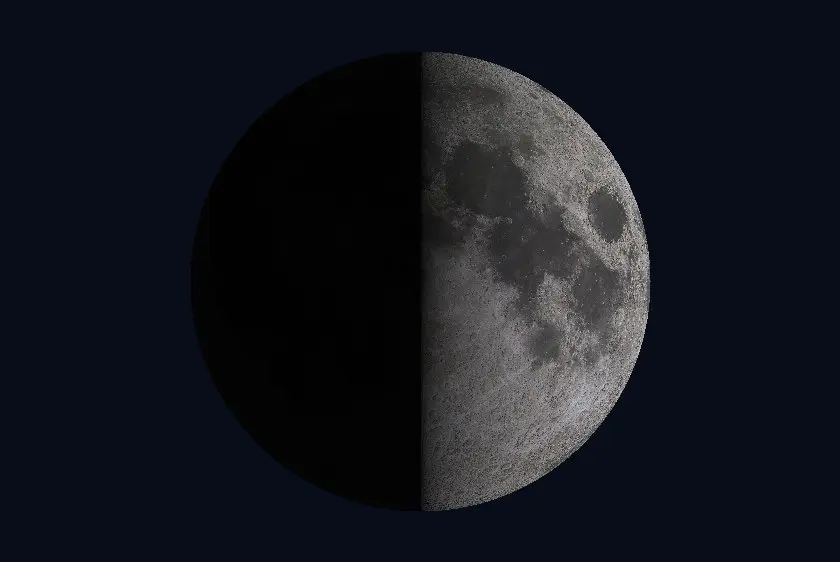
At first quarter the Moon has traveled roughly one quarter of the way around its cycle since new Moon. We see half of the sunlit surface, with the dividing line running approximately from pole to pole.

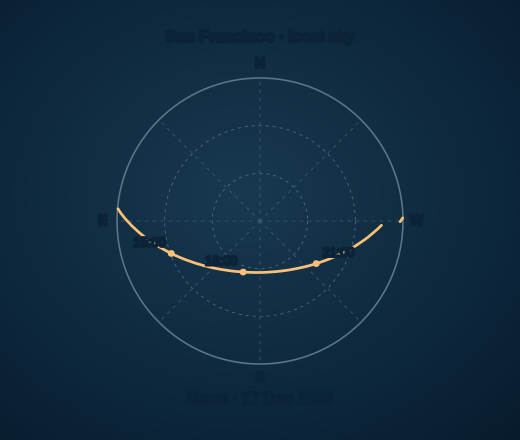
A first-quarter Moon typically rises around midday and sets around midnight. The changing orientation of the half-disk against the horizon depends on the observer’s latitude and the time of night.

Visit the terminator with binoculars. Low sunlight inside the craters casts long shadows, making it easier to distinguish a raised rim from a flat patch of differently colored ground.