

LIBRE TELESCOPE
Menu
Book Event

Sky Guide

Enceladus

Quick Stats

Name:
Enceladus
Type:
Object
Observability:
Expert
Best telescope for viewing:
Sky-Watcher Classic 250P 10-inch Dobsonian — for eligible elongations of faint Enceladus, close to the bright rings.

How to view Enceladus

  1. Wait for separation

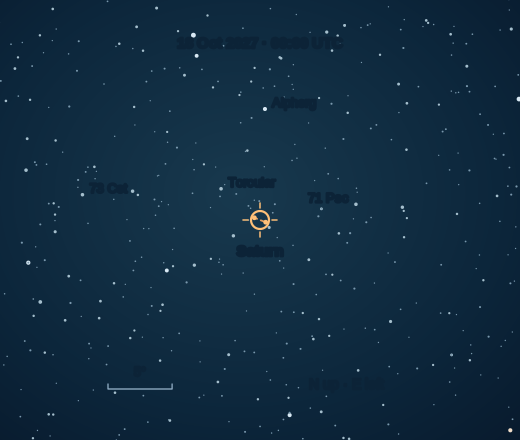
    Try October 11–25, 2027 and look up the position of Enceladus for your actual observing hour. Choose a time of wide separation from Saturn when the planet is high at your West Coast site.

  2. Match the moon pattern

    Center Saturn at low power. Rotate the predicted satellite configuration to match the eyepiece, then identify Enceladus by its distance and side relative to the planet.

  3. Check the motion

    Save the time and field orientation with your sketch or image. Compare it with the next observation and the predicted orbit of Enceladus.

Best telescope for viewing Enceladus: Sky-Watcher Classic 250P 10-inch Dobsonian — for eligible elongations of faint Enceladus, close to the bright rings. on Amazon

A closer look at Enceladus

Enceladus is a small icy moon, difficult to pick out against Saturn and its bright rings. Detecting the moon itself is an observing challenge.

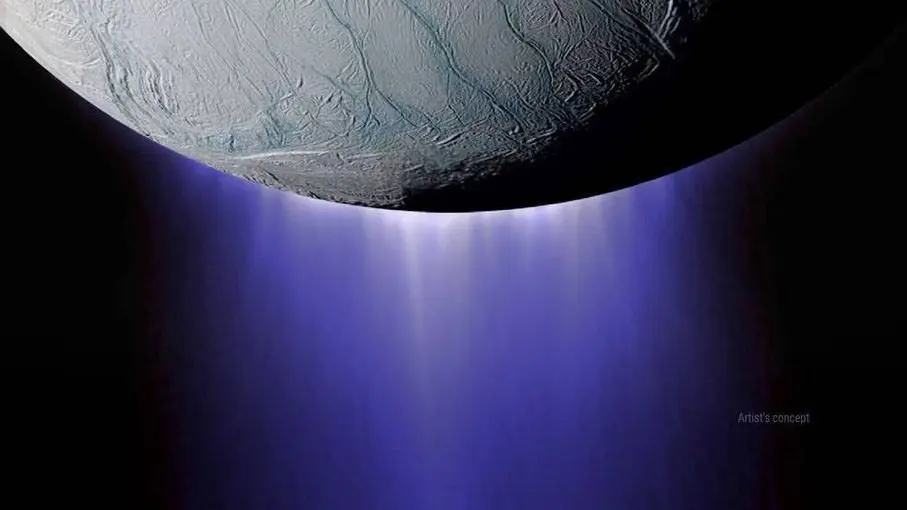
Cassini saw plumes erupting from fractures near the south pole. The material connects the visible surface to a salty ocean beneath the ice.

Use a large telescope and choose a time when the moon sits well away from the rings. Confirm its position against a moon chart.