
A closer look at Zircon geochronology
Zircon crystals can trap uranium when they form and preserve the lead produced by radioactive decay.
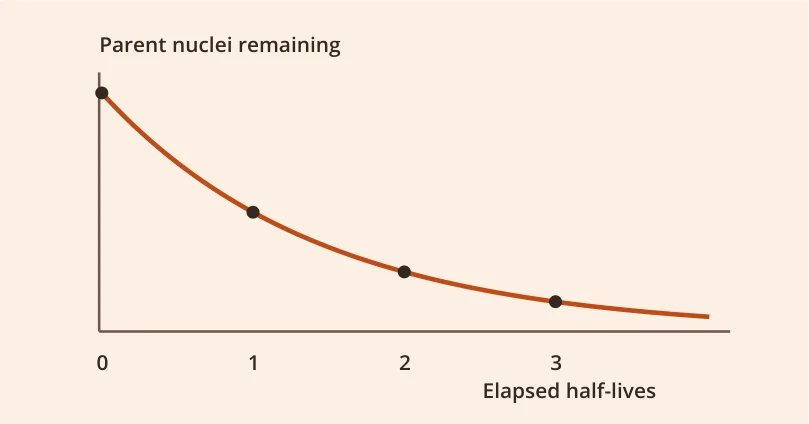
Measuring these isotopes can date crystallization and sometimes identify a later disturbance. A radioactive half-life is the time required for half the nuclei in a large sample to decay on average.
An old zircon core and younger rim can record two different events in a single grain. The age belongs to the sampled domain. For the surrounding ideas, see Cosmogenic exposure age.
static.ags.aer.ca · AER/AGS Open File Report 2023-02: Geochronology in Support of the Alberta Table of Formations: Uranium-Lead Isotope Dating… · Micrometer-scale U–Pb age domains in eucrite zircons, impact re-setting, and the thermal history of the HED parent body | U.S. Geological Survey
Want to learn more about Zircon geochronology? Zircon on Wikipedia.