
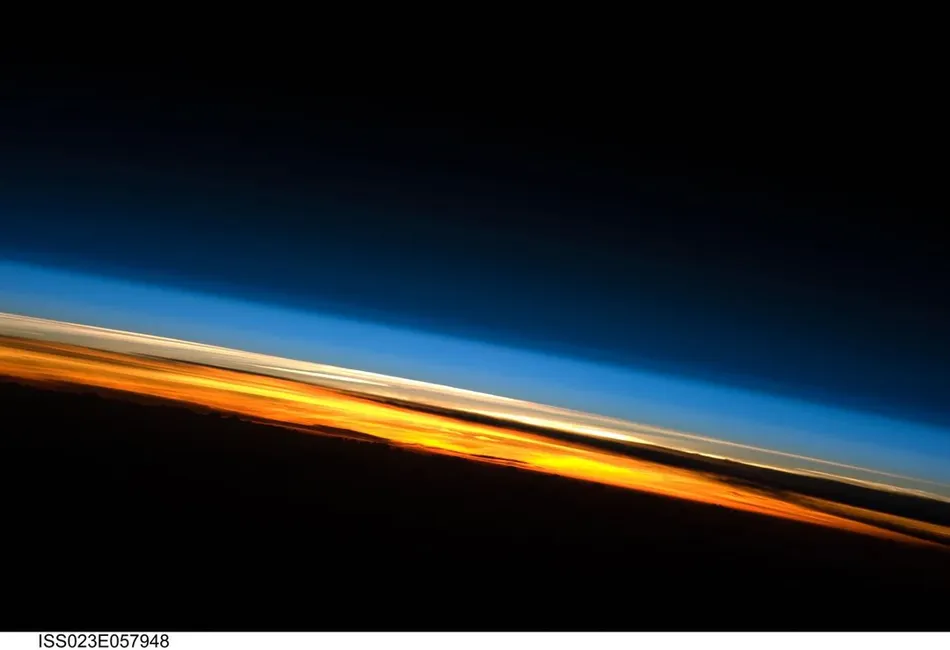
A closer look at Rayleigh scattering
Particles much smaller than an incident wavelength preferentially scatter shorter wavelengths under Rayleigh conditions.
This helps explain Earth’s blue daytime sky and the loss of blue light from a long direct solar path. In the low-energy limit, an electromagnetic wave scatters from a free electron through Thomson scattering.
Near sunset, a long air path removes more blue light from the direct beam. Clouds and aerosols can add other scattering processes to the scene.
Want to learn more about Rayleigh scattering? Rayleigh scattering on Wikipedia.