
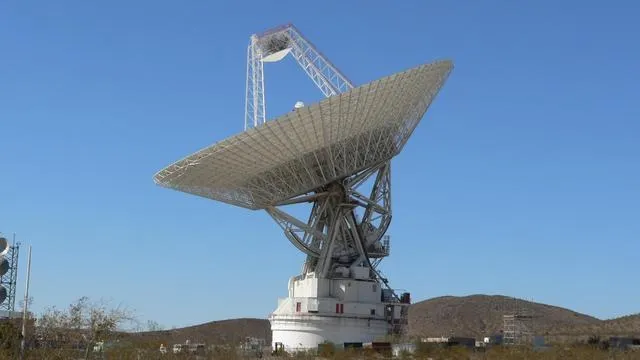
A closer look at Radio astronomy
Radio receivers detect long-wavelength signals from sources such as cold gas, pulsars, and galaxies.
Some sources radiate strongly in radio while looking faint in visible light. Dish arrays can combine their signals to sharpen detail.
A hydrogen line survey can map gas on the far side of dusty regions that block much of the visible light.
Want to learn more about Radio astronomy? Radio astronomy on Wikipedia.