
A closer look at Planetary bulk density
A planet’s mean density follows from its mass divided by its volume.
Transit radius and an independently measured mass can therefore constrain composition. Several different mixtures of rock, metal, ice, and gas may fit the same bulk density. Sub-Neptune describes planets smaller than Neptune, often in a radius range above Earth’s.
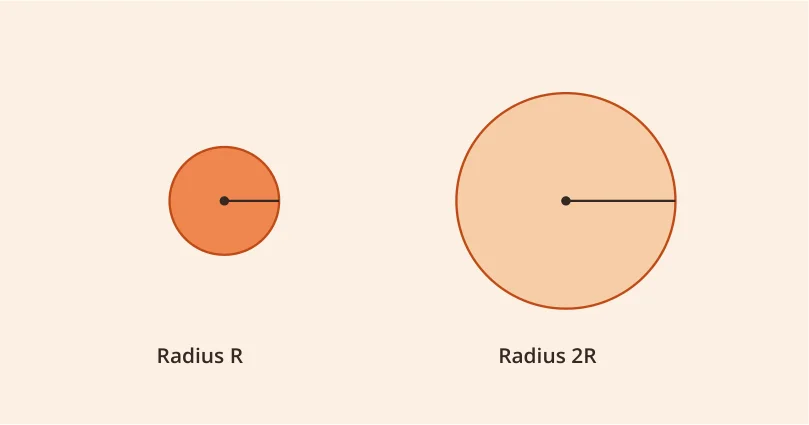
Two planets of equal mass can look very different in transit. If one has twice the other’s radius, its volume is eight times larger and its mean density is one eighth as great. For the surrounding ideas, see Transit depth.
Want to learn more about Planetary bulk density? Density on Wikipedia.