
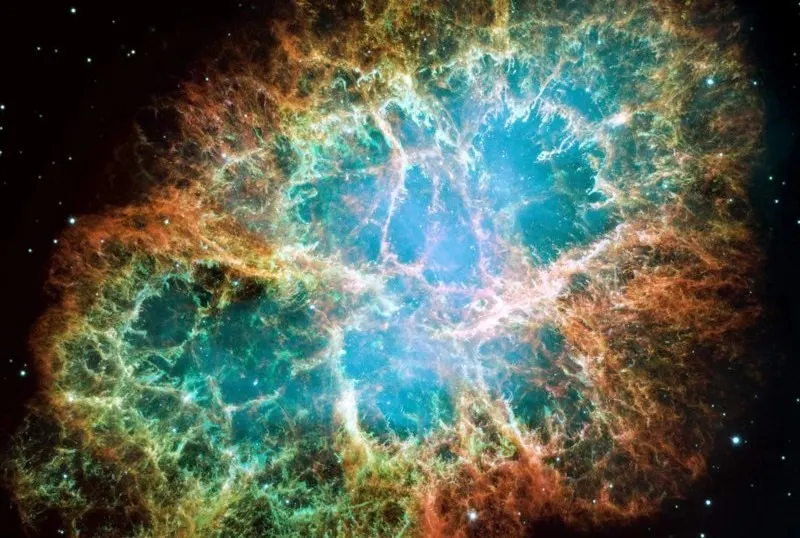
A closer look at Multi-messenger astronomy
Light, neutrinos, gravitational waves, and charged cosmic rays carry different kinds of information.
Combining independently detected signals can constrain a source more tightly. Timing, location, and chance coincidences must all be evaluated. A gamma-ray burst is a brief flash of high-energy photons from a distant source.
A gravitational-wave chirp can describe a merger’s masses, while light from the same event can identify a galaxy and trace newly ejected matter.
Want to learn more about Multi-messenger astronomy? Multi-messenger astronomy on Wikipedia.