
A closer look at Interstellar dust
Tiny solid grains absorb and scatter light.
Although dust makes up only a small fraction of ordinary interstellar matter by mass, it strongly affects visible images and radiates absorbed energy in the infrared. A reflection nebula glows chiefly by scattering light from nearby stars. A dark patch in a bright Milky Way field can conceal a molecular cloud.
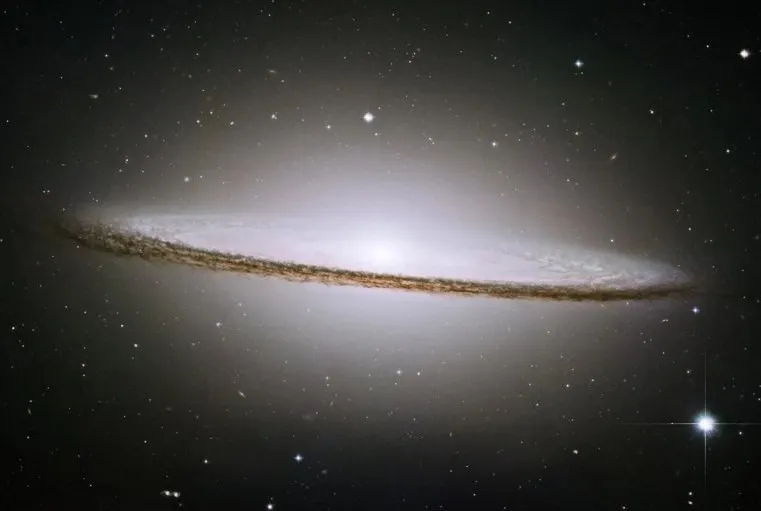
In an edge-on spiral galaxy, a thin dark lane can trace a large amount of intervening dust along a narrow line of sight.
Want to learn more about Interstellar dust? Cosmic dust on Wikipedia.