
A closer look at IceCube Neutrino Observatory
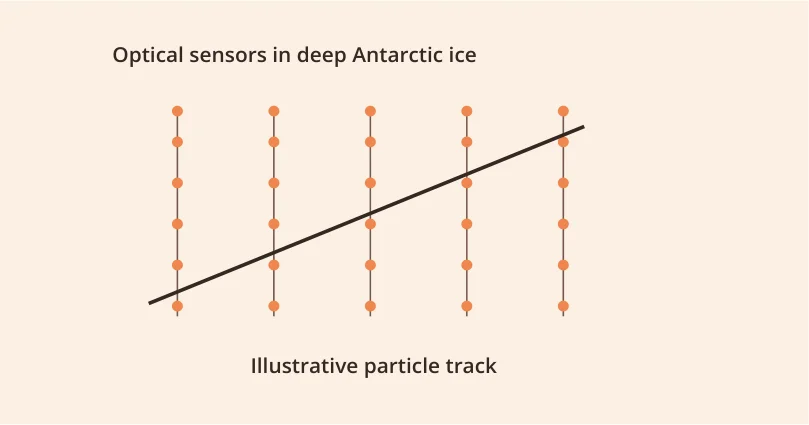
IceCube uses optical sensors embedded in Antarctic ice to study neutrinos.
The sensors detect light from secondary charged particles produced when a neutrino interacts nearby. The Pierre Auger Observatory in Argentina samples particle showers made when extremely energetic cosmic rays hit the atmosphere.
The timing of flashes across many sensors helps reconstruct an event’s direction. Long tracks and compact cascades carry different kinds of information. For the surrounding ideas, see Solar energetic particle event.
Want to learn more about IceCube Neutrino Observatory? IceCube Neutrino Observatory on Wikipedia.