
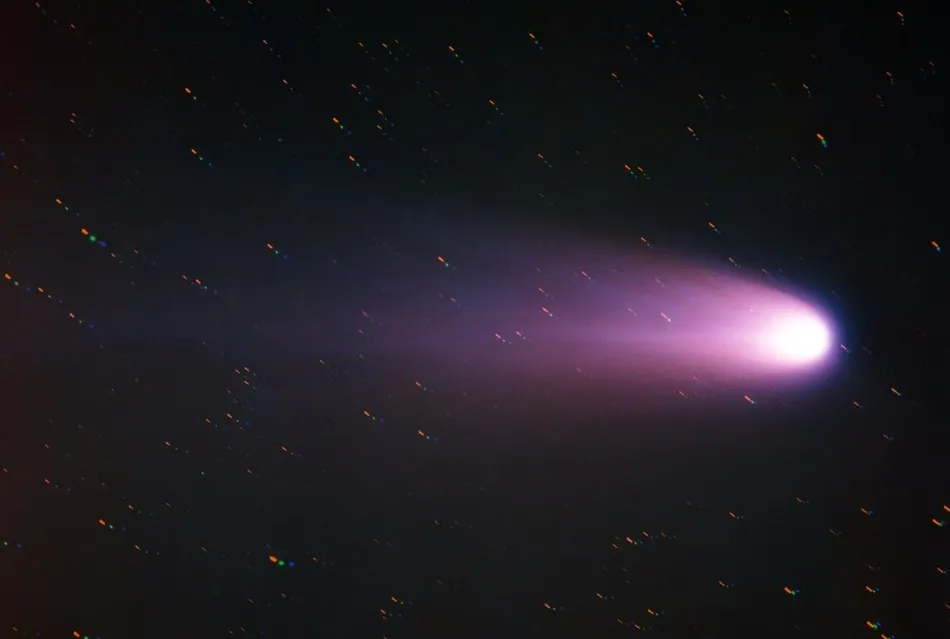
A closer look at Dust and ion tails
Comet dust responds to solar gravity and radiation pressure, often forming a curved tail.
Electrically charged gas interacts with the solar wind and can form a straighter ion tail. Neither tail simply marks the comet’s past path.
An outbound comet can have a tail extending ahead of its direction of travel because the Sun still governs the tail’s orientation.
Want to learn more about Dust and ion tails? Comet tail on Wikipedia.