
A closer look at Celestial navigation sight
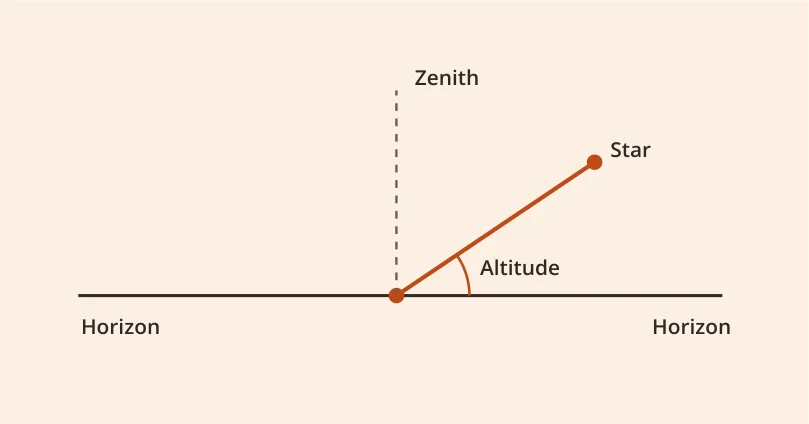
A navigator can measure a celestial body’s altitude at a known time and compare it with a prediction.
The result constrains the observer to a line of position over a small chart region. Another well-placed observation can narrow the fix. Hour angle describes how far a celestial object has moved west of the local meridian, measured along the celestial equator. A sextant measures the angle between two directions.
Two bodies in nearly the same direction give similar lines of position. Widely separated directions can produce a more useful intersection.
Want to learn more about Celestial navigation sight? Celestial navigation on Wikipedia.