
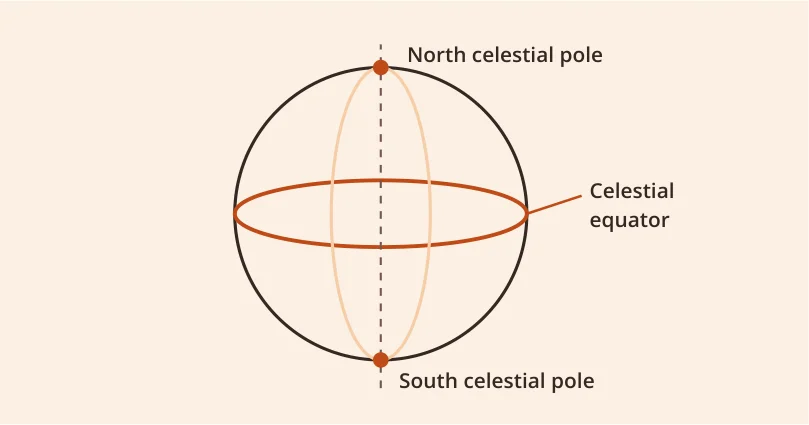
A closer look at Celestial meridian
A line through north, overhead, and south divides the local sky.
As Earth rotates, a star crosses your meridian. At its upper crossing it reaches its greatest altitude for that daily circuit. Observers have long used this moment to measure positions and keep time. Al-Biruni described estimating Earth’s radius from a mountain.
A telescope may give a steadier view of a planet near its upper crossing because the line of sight cuts through less atmosphere. For the surrounding ideas, see Altitude and azimuth.
Want to learn more about Celestial meridian? Meridian (astronomy) on Wikipedia.