

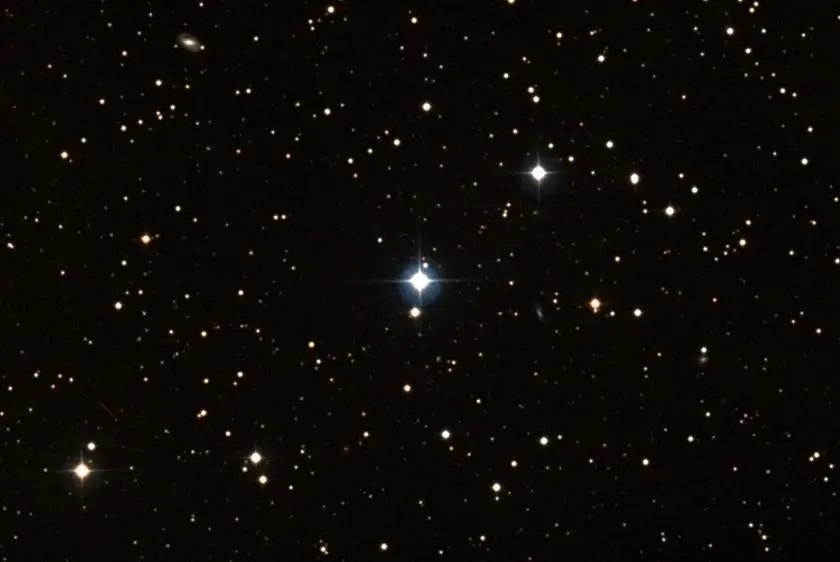
A closer look at WASP-33 b
The host of WASP-33 b pulsates, superimposing stellar variations on the planet’s transits. The giant planet travels on a strongly misaligned orbit around this hot star.
The catalogue gives an orbital period of 1.22 days. A transit lasts about 2.9 hours and lowers the star’s measured light by roughly 1.2%. A stable comparison star helps separate that dip from changes in the sky.
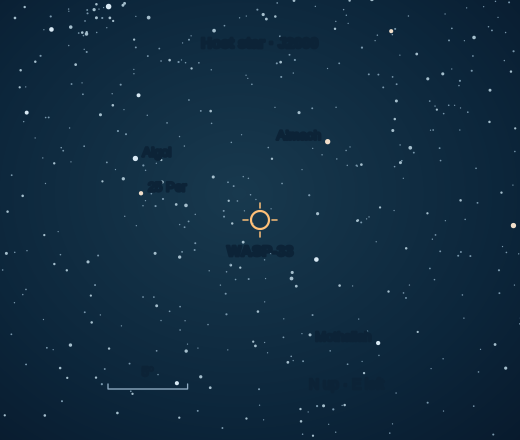
A good light curve must account for pulsations both before and after the transit. Treating every brightness change as planetary would give a poor model. On a wide-field chart, NGC 949 in Triangulum lies about 53 arcminutes from this target.
Want to learn more about WASP-33 b? WASP-33b on Wikipedia.