


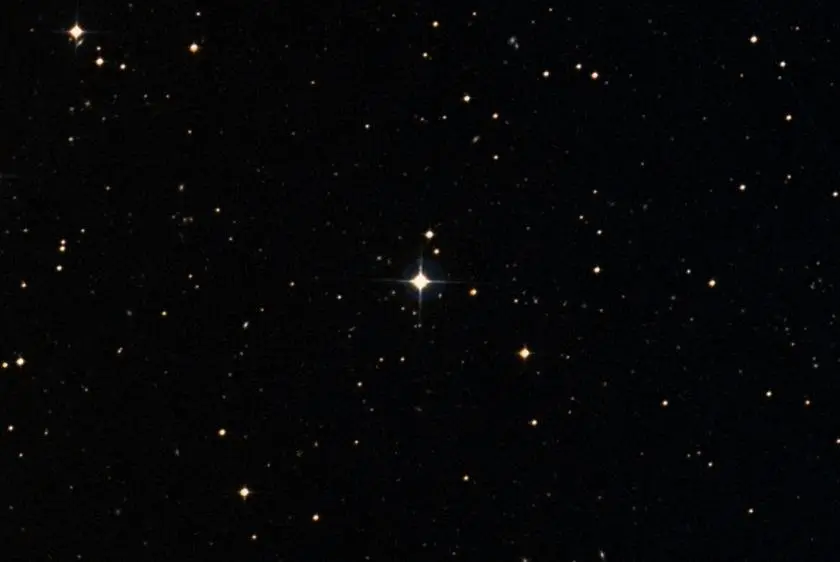
A closer look at WASP-18 b
This massive hot Jupiter completes an orbit in less than a day. Its intense dayside radiation has been measured when the planet disappears behind the star.
The catalogue gives an orbital period of 0.941 days. A transit lasts about 2.2 hours and lowers the star’s measured light by roughly 1%. A stable comparison star helps separate that dip from changes in the sky.
A transit measures blocked stellar light, while an eclipse behind the star removes the planet’s own light. Together the two events reveal different properties. On a wide-field chart, NGC 685 in Eridanus lies about 7.3° from this target.
Want to learn more about WASP-18 b? WASP-18b on Wikipedia.