

LIBRE TELESCOPE
Menu
Book Event

Sky Guide

Vallis Palitzsch

Quick Stats

Name:
Vallis Palitzsch
Type:
Object
Observability:
Intermediate
Best telescope for viewing:
Celestron NexStar 127SLT Maksutov — for the changing pattern of light and shadow on this terrain.

How to view Vallis Palitzsch

  1. Choose the illumination

    Try December 11–13, 2026, or the same lunar illumination in another month. For a West Coast site, check moonset and look while the feature is sunlit and the Moon is high.

  2. Locate the feature

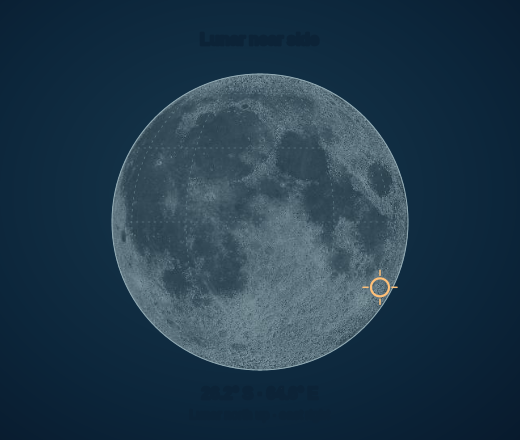
    On a lunar atlas, mark 26.2° S / 64.6° E. Orient the lunar disk in the finder, then move from the nearest broad dark plain or bright crater to Vallis Palitzsch.

  3. Study the detail

    The valley lies outside it, distinct from the conspicuous fracture inside Petavius itself.

Best telescope for viewing Vallis Palitzsch: Celestron NexStar 127SLT Maksutov — for the changing pattern of light and shadow on this terrain. on Amazon

A closer look at Vallis Palitzsch

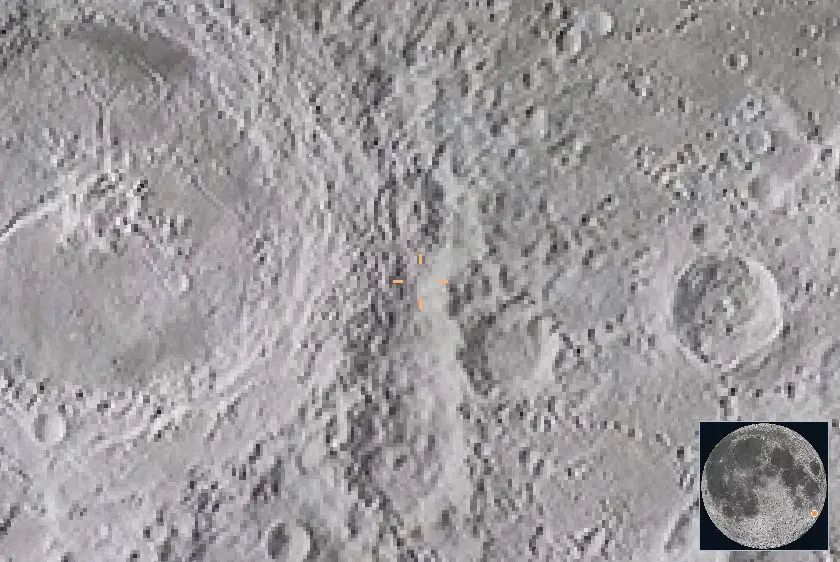
A chain of depressions beside the crater Petavius forms the long lane called Palitzsch Valley. Viewed from Earth, the southeastern terrain is markedly foreshortened.

The IAU catalogue gives 110 km for its extent. As a scale reference, the crater Petavius is centered about 108 km away to the west.

Use the great rim of Petavius as a reference. The valley lies outside it, distinct from the conspicuous fracture inside Petavius itself. Low sunlight near the lunar terminator makes shallow ridges and crater walls cast long shadows.