

LIBRE TELESCOPE
Menu
Book Event

Sky Guide

Vallis Bouvard

Quick Stats

Name:
Vallis Bouvard
Type:
Object
Observability:
Difficult
Best telescope for viewing:
Sky-Watcher Classic 200P 8-inch Dobsonian — for fine lunar relief in steady air and low-angle sunlight.

How to view Vallis Bouvard

  1. Choose the illumination

    Select a night when libration turns the western limb toward Earth. Check local moonrise and illumination. Pick a time when the Moon is well above the horizon in your city.

  2. Locate the feature

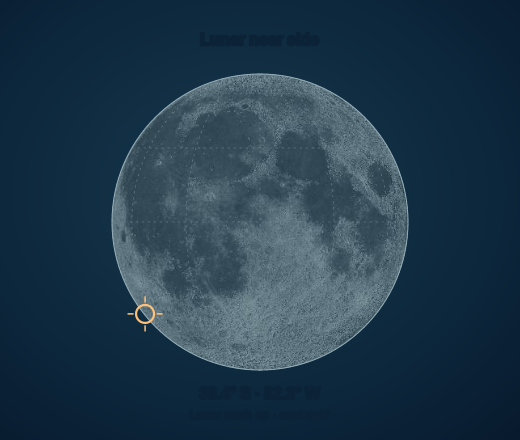
    On a lunar atlas, mark 38.4° S / 82.3° W. Orient the lunar disk in the finder, then move from the nearest broad dark plain or bright crater to Vallis Bouvard.

  3. Study the detail

    Treat an identifiable section as a successful observation.

Best telescope for viewing Vallis Bouvard: Sky-Watcher Classic 200P 8-inch Dobsonian — for fine lunar relief in steady air and low-angle sunlight. on Amazon

A closer look at Vallis Bouvard

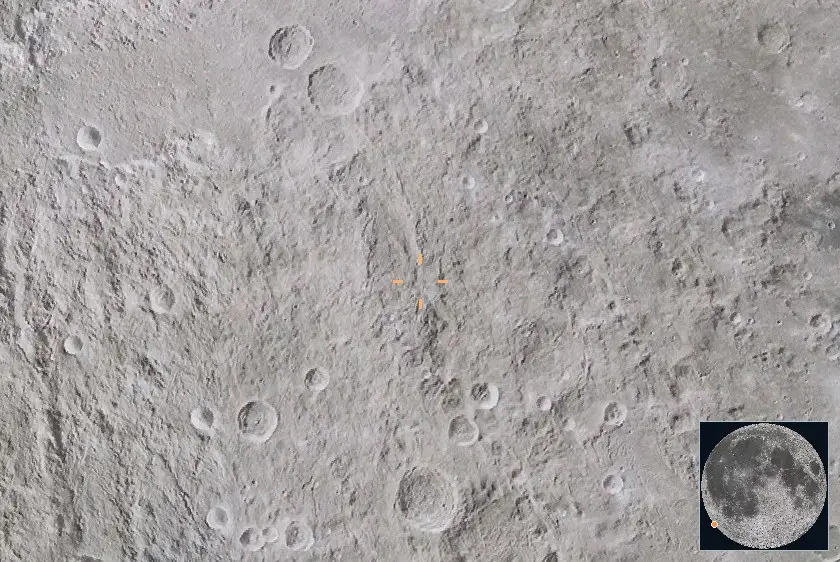
Bouvard Valley lies near the southwestern limb in terrain influenced by the Orientale impact. Its position gives Earth observers a foreshortened view across an already complicated landscape.

On a north-up lunar map, the center of Shaler lies about 184 km northwest of this feature. The IAU catalogue gives 288 km for its extent.

Use favorable western libration and confirm the surrounding craters first. Treat an identifiable section as a successful observation. Low sunlight near the lunar terminator makes shallow ridges and crater walls cast long shadows. The guide to impact craters explains how an impact excavates a cavity and throws debris beyond its rim.