


LIBRE TELESCOPE
Menu
Book Event

Sky Guide

Uranus

Quick Stats

Name:
Uranus
Type:
Object
Observability:
Intermediate
Best telescope for viewing:
Celestron NexStar 127SLT Maksutov — to distinguish the small disk of Uranus from stars in its field.

How to view Uranus

  1. Check the evening sky

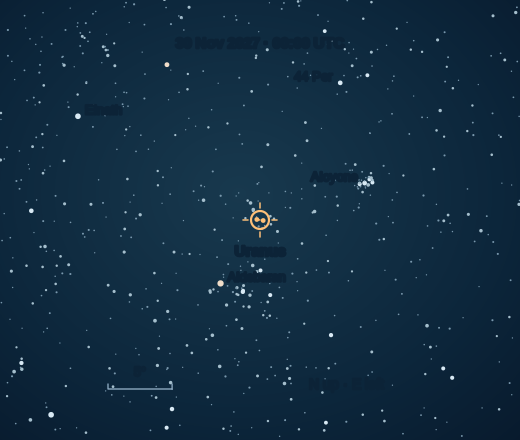
    Try November 24–December 5, 2027. Use your West Coast city and Pacific local time to find when Uranus reaches its greatest altitude in darkness.

  2. Center the planet

    Use a chart for that date to match Uranus to the surrounding stars. Start at your lowest power and focus on the edge of the disk.

  3. Inspect the disk

    A second visit weeks later can confirm which point belongs to the planet.

Best telescope for viewing Uranus: Celestron NexStar 127SLT Maksutov — to distinguish the small disk of Uranus from stars in its field. on Amazon

A closer look at Uranus

Uranus looks like an inconspicuous star in binoculars. A telescope at sufficient power can resolve its small disk.

Its spin axis is tipped so far that the planet rolls around the Sun almost on its side. Its seasons last decades by Earth standards.

Use an up-to-date chart and sketch the surrounding stars. A second visit weeks later can confirm which point belongs to the planet. The angular size of a distant body determines how much of its surface a telescope can resolve. Two surface markings can blend together when their separation falls below a telescope’s angular resolution.

Want to learn more about Uranus? Uranus on Wikipedia.