

A closer look at Upsilon Andromedae d
Upsilon Andromedae d belongs to one of the earliest recognized multiplanet systems around a Sun-like star. More than one orbit was needed to explain the changing velocity of the host.
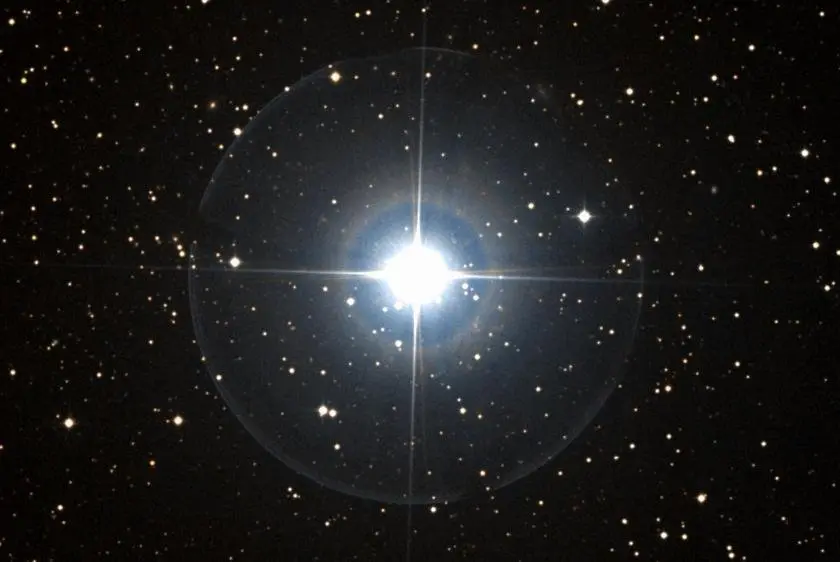
The system is about 44 light-years away, and the catalogue gives an orbital period of roughly 3.49 years. The host has visual magnitude 4.10, which sets the scale of the starlight an observer must contend with.
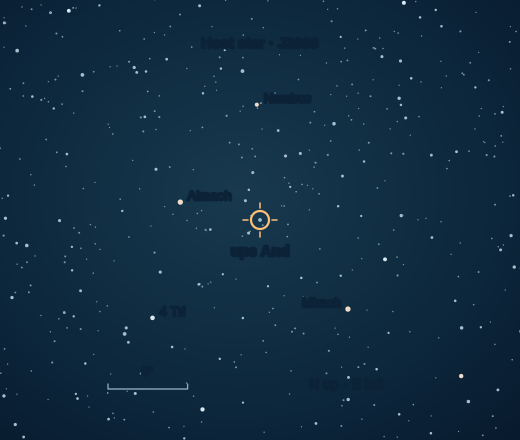
The star is readily visible, but separating the overlapping planetary signals required a long sequence of spectra. Its sky position gives the observing project a tangible starting point.
NASA · planet archive · Host star on Wikipedia: Upsilon Andromedae · Identifiers and catalog cross-references
Want to learn more about Upsilon Andromedae d? Upsilon Andromedae d on Wikipedia.