

LIBRE TELESCOPE
Menu
Book Event

Sky Guide

The Trifid Nebula

M20

Quick Stats

Name:
The Trifid Nebula (M20)
Type:
Object
Observability:
Intermediate
Best telescope for viewing:
Sky-Watcher Classic 200P 8-inch Dobsonian — to follow the brightest structure and compare its edge with the nearby sky.

How to view M20

  1. Plan around meridian passage

    Try July 31–August 4, 2027. At its highest the field is about 33° above the horizon in Los Angeles and 19° in Seattle. Use your city’s meridian time for the best view.

  2. Find the field

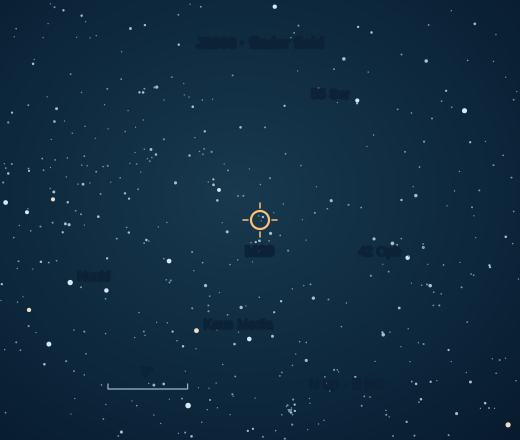
    On the north-up chart, start at Kaus Borealis. The target lies about 6.3° west of it. Match the surrounding stars before changing magnification.

  3. Check the identification

    The catalogued long axis is 28 arcminutes. Scan from the brightest patch into the adjacent sky, then reverse the sweep to check where the visible boundary falls.

Best telescope for viewing M20: Sky-Watcher Classic 200P 8-inch Dobsonian — to follow the brightest structure and compare its edge with the nearby sky. on Amazon

A closer look at M20

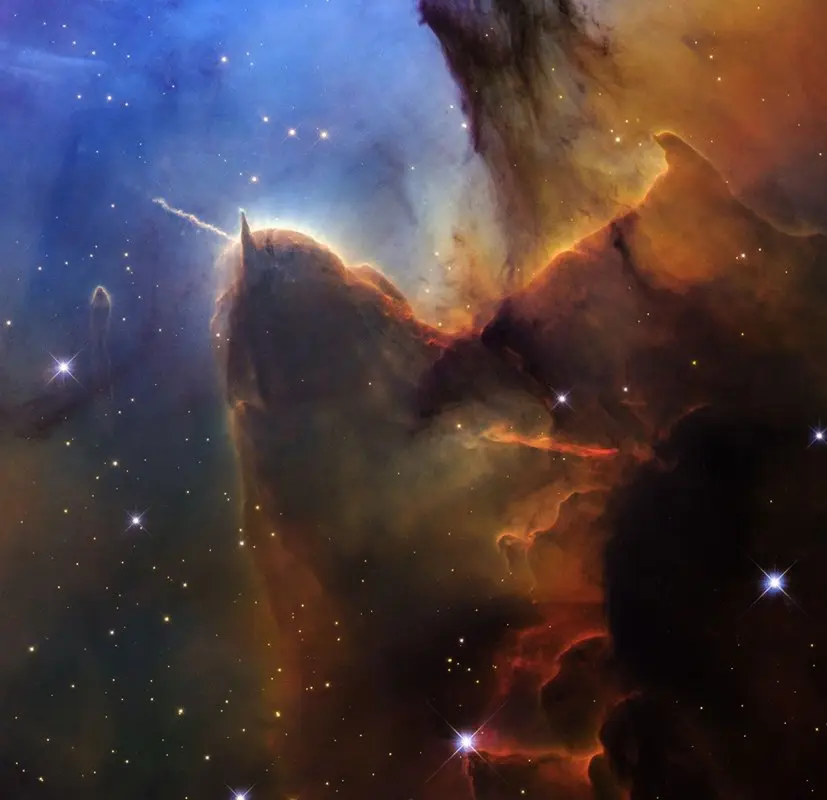
M20 takes its name from dark lanes that divide the brighter nebula into lobes. Dense dust blocks light along our view into the cloud.

Different regions shine in different ways. Some gas emits light under the influence of hot stars, while nearby dust scatters starlight.

Observe the Trifid after its brighter neighbor the Lagoon. Try to trace one dark division before comparing your sketch with a photograph. On a wide-field chart, M21 in Sagittarius lies about 40 arcminutes from this target. Use an eyepiece with a wide field of view to match the surrounding pattern of stars to the finder chart.

Want to learn more about the Trifid Nebula? Trifid Nebula on Wikipedia.