

LIBRE TELESCOPE
Menu
Book Event

Sky Guide

TrES-2 b

Quick Stats

Name:
TrES-2 b
Type:
Object
Observability:
Difficult
Best telescope for viewing:
Tracking telescope and calibrated astronomy camera for transit photometry. Use a comparison star in the same field.

How to view TrES-2 b

  1. Plan around meridian passage

    Try July 31–August 4, 2027. At its highest the field is about 75° above the horizon in Los Angeles and 88° in Seattle. Use your city’s meridian time for the best view.

  2. Identify the host star

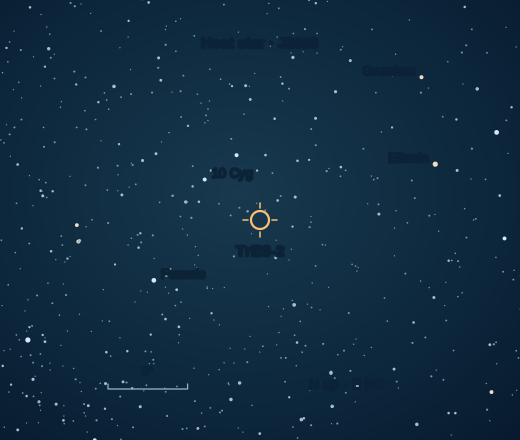
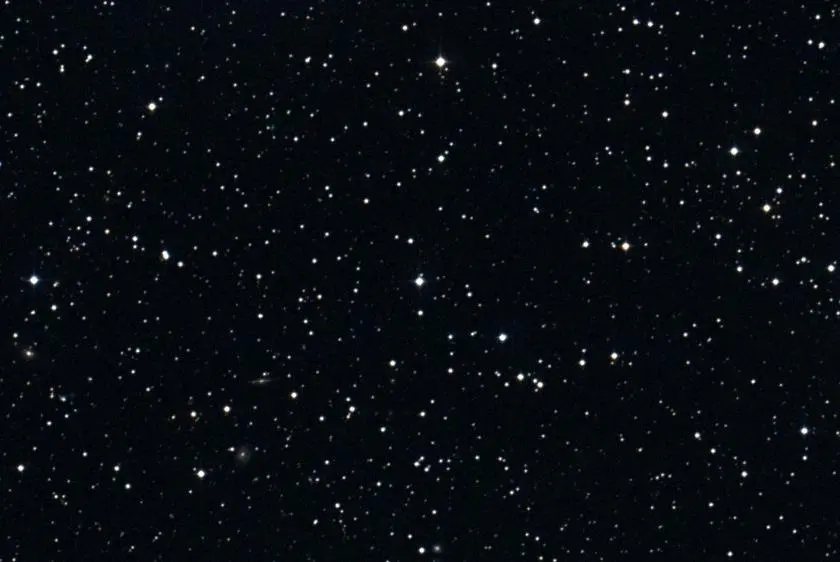
    On the north-up chart, start at Fawaris. The target lies about 7.6° northwest of it. Match the surrounding stars before changing magnification. The point to identify is TrES-2, listed at visual magnitude 11.3.

  3. Record the dip

    Obtain a current transit prediction for TrES-2 at your West Coast site. Record the host and comparison stars before, during and after the event. Look for a change of about 1.6%.

A closer look at TrES-2 b

This hot Jupiter reflects remarkably little visible light. Astronomers determined that property by measuring subtle brightness changes through the orbit, including when the planet hid behind its star.

The catalogue gives an orbital period of 2.47 days. A transit lasts about 1.7 hours and lowers the star’s measured light by roughly 1.6%. A stable comparison star helps separate that dip from changes in the sky.

A deep primary transit need not mean that the planet is bright. Blocking starlight and reflecting starlight are distinct measurements. On a wide-field chart, Blinking Planetary Nebula lies about 6.2° from this target.