

LIBRE TELESCOPE
Menu
Book Event

Sky Guide

A transit of Venus

Quick Stats

Name:
A transit of Venus
Type:
Event
Observability:
Easy
Rarity:
Very rare · 8-year pairs separated by gaps of 105+ years
Date of last occurrence:
Jun 6, 2012
Date of next occurrence:
Dec 11, 2117
Date of occurrence after that:
Dec 8, 2125
Best telescope for viewing:
Celestron EclipSmart 50 mm dedicated white-light solar telescope — for the silhouette crossing the solar disk. Keep the built-in solar filter in place throughout.

Greatest transit · UT · Calendar reference: November 28, 2026.

How to view A transit of Venus

  1. Check the visibility map

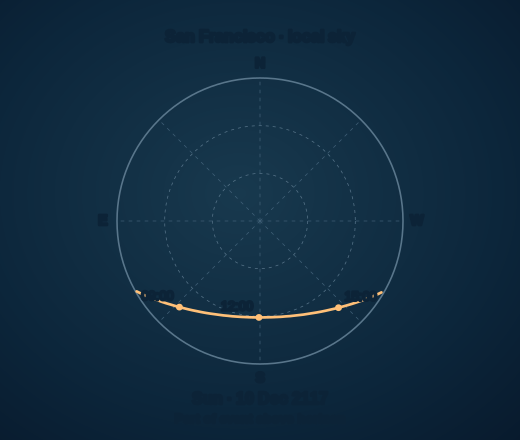
    Check the December 2117 transit map for the contact times at your location. Pacific local dates differ from the Universal Time date, and the Sun must be above the horizon during a contact.

  2. Prepare solar-safe optics

    Use a dedicated solar telescope or a purpose-built solar filter securely fitted over the full front aperture. Keep the filter fitted for the entire transit. Eclipse glasses do not make an unfiltered telescope safe.

  3. Follow the silhouette

    Note where the dark circle enters and exits the solar disk. Compare the recorded contact times with the prediction for the observing location.

Best telescope for viewing A transit of Venus: Celestron EclipSmart 50 mm dedicated white-light solar telescope — for the silhouette crossing the solar disk. Keep the built-in solar filter in place throughout. on Amazon

A closer look at A transit of Venus

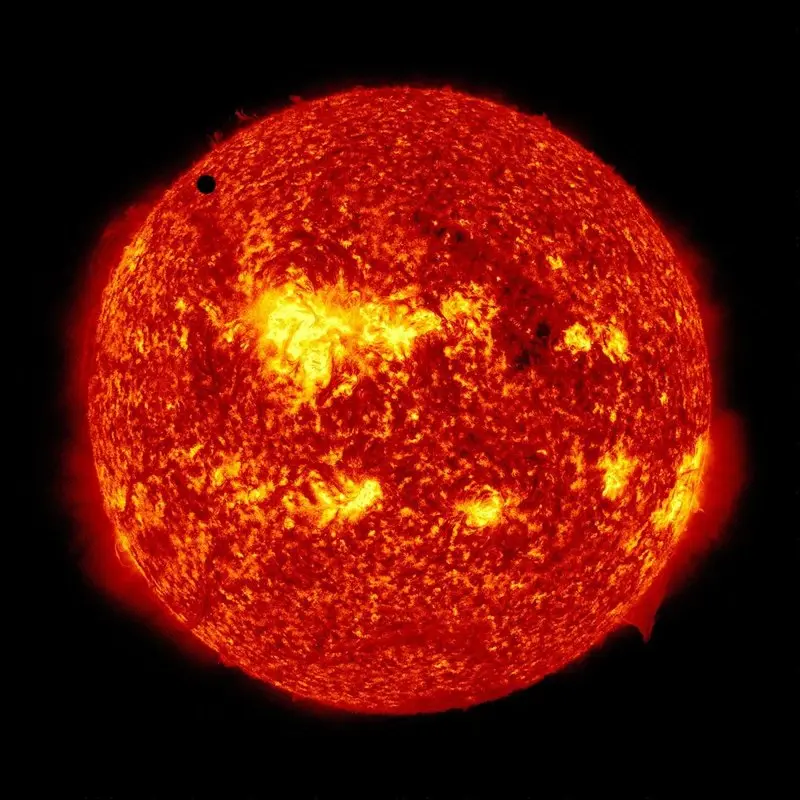
Venus occasionally passes directly between Earth and the Sun. Seen through a suitable solar viewer, the planet appears as a distinct dark disk.

Observers once traveled across oceans to time these transits. Comparing timings from widely separated sites helped establish the size of Earth’s orbit.

Use a dedicated solar telescope or optics with a securely fitted front solar filter. For direct viewing use an ISO 12312-2 solar viewer throughout. The Sun stays dangerously bright for the entire transit. A chart of the celestial sphere helps translate an event’s position into a direction from your observing site.

Want to learn more about a transit of Venus? Transit of Venus on Wikipedia.