


LIBRE TELESCOPE
Menu
Book Event

Sky Guide

The Swan Nebula

M17

Quick Stats

Name:
The Swan Nebula (M17)
Type:
Object
Observability:
Easy
Best telescope for viewing:
Sky-Watcher Classic 200P 8-inch Dobsonian — to follow the brightest structure and compare its edge with the nearby sky.

How to view M17

  1. Plan around meridian passage

    Try July 31–August 4, 2027. At its highest the field is about 40° above the horizon in Los Angeles and 26° in Seattle. Use your city’s meridian time for the best view.

  2. Find the field

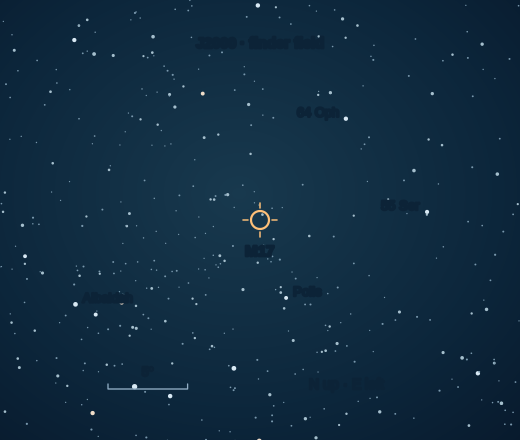
    On the north-up chart, start at Kaus Borealis. The target lies about 9.4° north of it. Match the surrounding stars before changing magnification.

  3. Check the identification

    The catalogued long axis is 12.6 arcminutes. Scan from the brightest patch into the adjacent sky, then reverse the sweep to check where the visible boundary falls.

Best telescope for viewing M17: Sky-Watcher Classic 200P 8-inch Dobsonian — to follow the brightest structure and compare its edge with the nearby sky. on Amazon

A closer look at M17

M17 is also called the Omega or Swan Nebula. A bright bar of gas makes it one of the more recognizable nebulae in Sagittarius.

Young stars illuminate the cloud from within. Infrared observations can probe areas where thick dust cuts off visible light.

Look for the bright bar first. With more time at the eyepiece, see whether adjacent fainter light suggests a bird’s neck. On a wide-field chart, M18 in Sagittarius lies about 54 arcminutes from this target. Use an eyepiece with a wide field of view to match the surrounding pattern of stars to the finder chart.