

LIBRE TELESCOPE
Menu
Book Event

Sky Guide

Sinus Roris

Quick Stats

Name:
Sinus Roris
Type:
Object
Observability:
Easy
Best telescope for viewing:
Celestron Cometron 7×50 binoculars — to trace the extent of the darker plain against the lunar highlands.

How to view Sinus Roris

  1. Choose the illumination

    Try December 21–23, 2026, or the same lunar illumination in another month. For a West Coast site, check moonset and look while the feature is sunlit and the Moon is high.

  2. Locate the feature

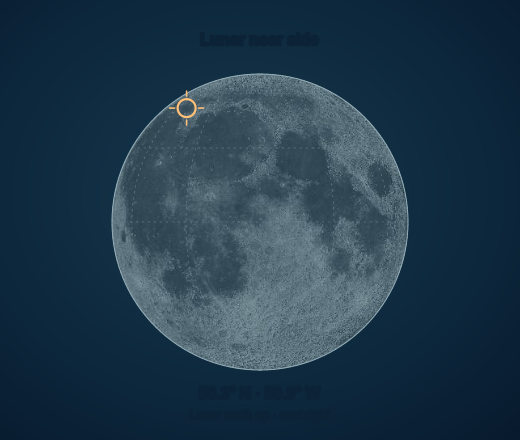
    On a lunar atlas, mark 50.3° N / 50.9° W. Orient the lunar disk in the finder, then move from the nearest broad dark plain or bright crater to Sinus Roris.

  3. Study the detail

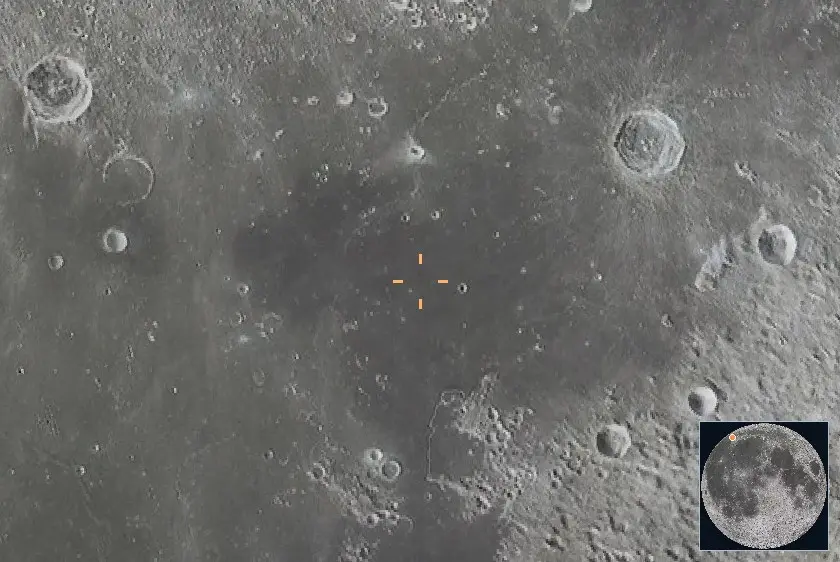
    The transition from smooth lava to rough bright terrain defines the bay more clearly than any sharp shoreline.

Best telescope for viewing Sinus Roris: Celestron Cometron 7×50 binoculars — to trace the extent of the darker plain against the lunar highlands. on Amazon

A closer look at Sinus Roris

The Bay of Dew is a broad northern extension of Oceanus Procellarum. Its open boundary looks quite different from the enclosed curve of Sinus Iridum.

The IAU catalogue gives 195 km for its extent. The center of the crater South is about 222 km to its north, measured along the lunar surface.

Follow the western mare northward. The transition from smooth lava to rough bright terrain defines the bay more clearly than any sharp shoreline.