

LIBRE TELESCOPE
Menu
Book Event

Sky Guide

Schickard Crater

Quick Stats

Name:
Schickard Crater
Type:
Object
Observability:
Easy
Best telescope for viewing:
Celestron NexStar 127SLT Maksutov — for the outline and interior detail at moderate to high power.

How to view Schickard Crater

  1. Choose the illumination

    Try December 21–23, 2026, or the same lunar illumination in another month. For a West Coast site, check moonset and look while the feature is sunlit and the Moon is high.

  2. Locate the feature

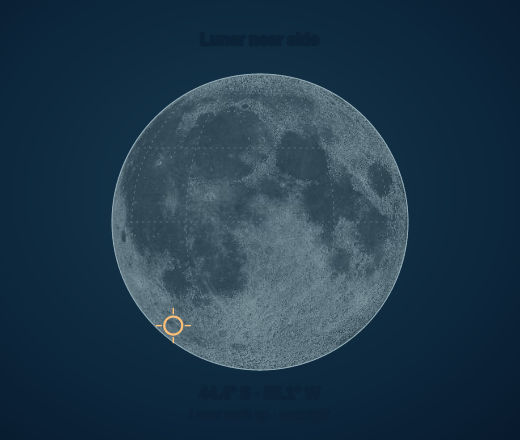
    On a lunar atlas, mark 44.4° S / 55.1° W. Orient the lunar disk in the finder, then move from the nearest broad dark plain or bright crater to Schickard Crater.

  3. Study the detail

    Observe again during a favorable libration to see how much its apparent width changes.

Best telescope for viewing Schickard Crater: Celestron NexStar 127SLT Maksutov — for the outline and interior detail at moderate to high power. on Amazon

A closer look at Schickard Crater

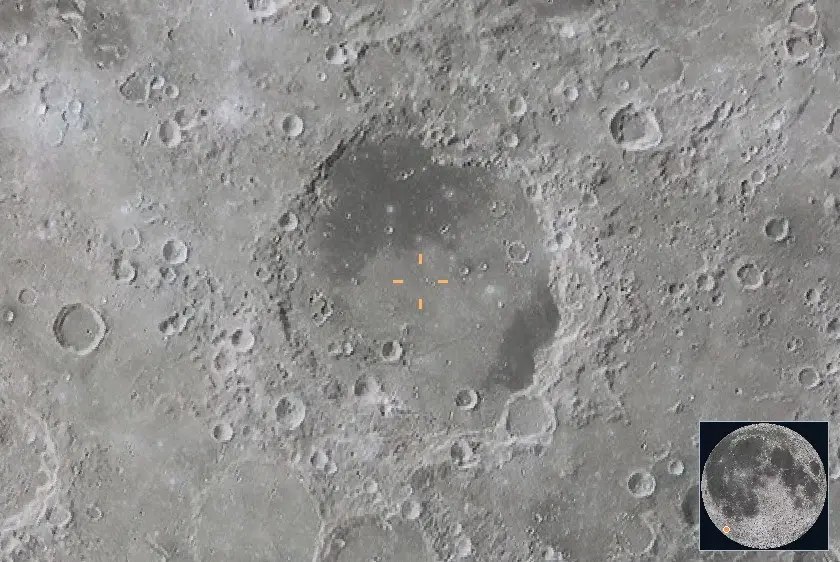
Schickard is a huge, old walled plain near the southwestern limb. Its floor contains areas of differing brightness that survive even after shadows shorten.

The crater measures about 212 km across. As a scale reference, the crater Lehmann is centered about 136 km away to the north.

Look for broad tonal changes across the floor. Observe again during a favorable libration to see how much its apparent width changes. Low sunlight near the lunar terminator makes shallow ridges and crater walls cast long shadows. The guide to impact craters explains how an impact excavates a cavity and throws debris beyond its rim.