

LIBRE TELESCOPE
Menu
Book Event

Sky Guide

Rimae Hippalus

Quick Stats

Name:
Rimae Hippalus
Type:
Object
Observability:
Difficult
Best telescope for viewing:
Sky-Watcher Classic 200P 8-inch Dobsonian — for fine lunar relief in steady air and low-angle sunlight.

How to view Rimae Hippalus

  1. Choose the illumination

    Try December 19–21, 2026, or the same lunar illumination in another month. For a West Coast site, check moonset and look while the feature is sunlit and the Moon is high.

  2. Locate the feature

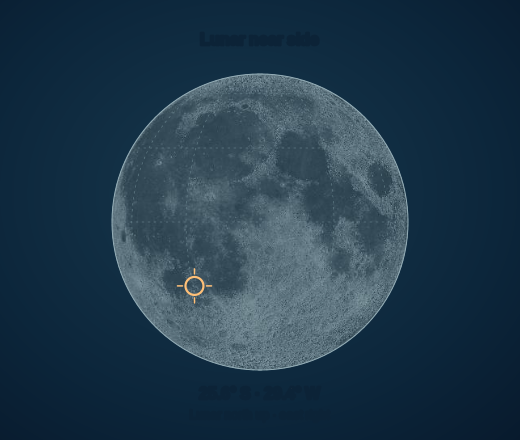
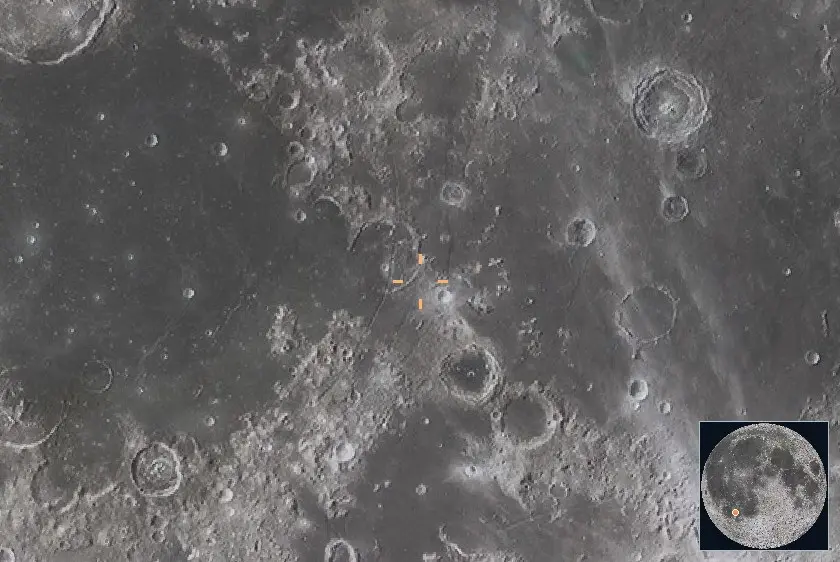
    On a lunar atlas, mark 25.6° S / 29.4° W. Orient the lunar disk in the finder, then move from the nearest broad dark plain or bright crater to Rimae Hippalus.

  3. Study the detail

    Finding parallel curves under low sunlight gives a stronger identification than seeing one isolated line.

Best telescope for viewing Rimae Hippalus: Sky-Watcher Classic 200P 8-inch Dobsonian — for fine lunar relief in steady air and low-angle sunlight. on Amazon

A closer look at Rimae Hippalus

Several curved rilles lie near the eastern margin of Mare Humorum. Their repeated arcs are linked to stress and bending of the basin’s lava-filled floor.

The IAU catalogue gives 266 km for its extent. The center of the crater Hippalus is about 36 km to its northwest, measured along the lunar surface.

Try to trace more than one arc in the same field. Finding parallel curves under low sunlight gives a stronger identification than seeing one isolated line.