

LIBRE TELESCOPE
Menu
Book Event

Sky Guide

Rima Ariadaeus

Quick Stats

Name:
Rima Ariadaeus
Type:
Object
Observability:
Difficult
Best telescope for viewing:
Sky-Watcher Classic 200P 8-inch Dobsonian — for fine lunar relief in steady air and low-angle sunlight.

How to view Rima Ariadaeus

  1. Choose the illumination

    Try December 16–18, 2026, or the same lunar illumination in another month. For a West Coast site, check moonset and look while the feature is sunlit and the Moon is high.

  2. Locate the feature

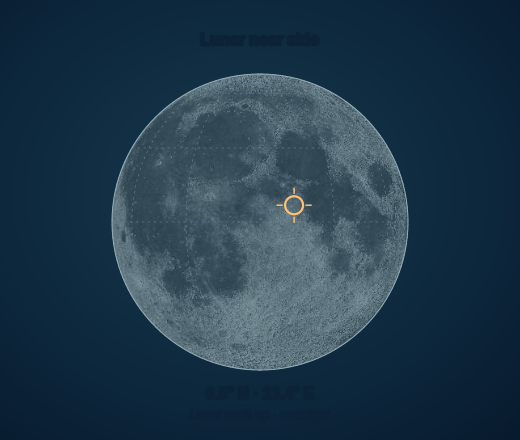
    On a lunar atlas, mark 6.5° N / 13.4° E. Orient the lunar disk in the finder, then move from the nearest broad dark plain or bright crater to Rima Ariadaeus.

  3. Study the detail

    Bright sunlight can make a feature of this length unexpectedly difficult.

Best telescope for viewing Rima Ariadaeus: Sky-Watcher Classic 200P 8-inch Dobsonian — for fine lunar relief in steady air and low-angle sunlight. on Amazon

A closer look at Rima Ariadaeus

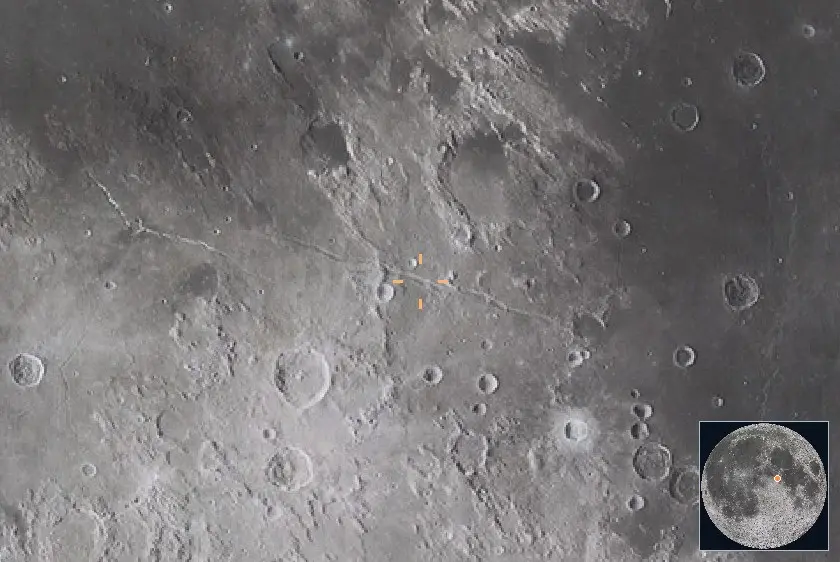
A long, relatively straight trench cuts across the terrain east of central Sinus Medii. This is a classic example of a lunar graben, where ground dropped between faults.

The IAU catalogue gives 247 km for its extent. The center of the crater Julius Caesar is about 97 km to its northeast, measured along the lunar surface.

Observe near the terminator and trace the trench a section at a time. Bright sunlight can make a feature of this length unexpectedly difficult.