

LIBRE TELESCOPE
Menu
Book Event

Quick Stats

Name:
Rhea
Type:
Object
Observability:
Intermediate
Best telescope for viewing:
Sky-Watcher Classic 200P 8-inch Dobsonian — to separate Rhea from the glare of Saturn.

How to view Rhea

  1. Wait for separation

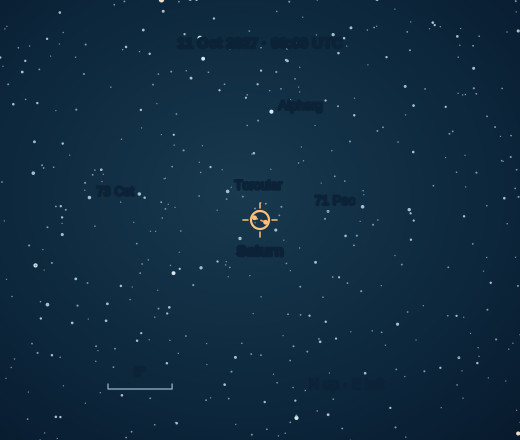
    Try October 11–25, 2027 and look up the position of Rhea for your actual observing hour. Choose a time of wide separation from Saturn when the planet is high at your West Coast site.

  2. Match the moon pattern

    Center Saturn at low power. Rotate the predicted satellite configuration to match the eyepiece, then identify Rhea by its distance and side relative to the planet.

  3. Check the motion

    Save the time and field orientation with your sketch or image. Compare it with the next observation and the predicted orbit of Rhea.

Best telescope for viewing Rhea: Sky-Watcher Classic 200P 8-inch Dobsonian — to separate Rhea from the glare of Saturn. on Amazon

A closer look at Rhea

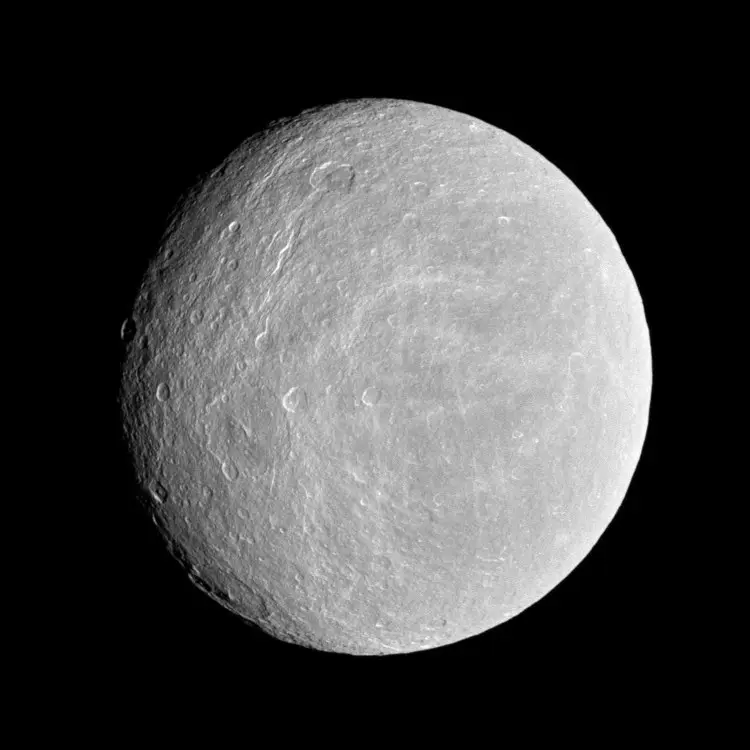
Rhea is Saturn’s second-largest moon. Its icy surface retains an extensive impact record, with bright scars standing out against terrain that has accumulated craters over time.

Rhea measures about 1,528 km across and takes roughly four and a half days to circle Saturn. A pair of drawings a few nights apart can show it on opposite sides of the planet.

Begin by identifying bright Titan as a scale reference, then use an ephemeris for Rhea. A drawing made a night later helps rule out background stars.