

LIBRE TELESCOPE
Menu
Book Event

Sky Guide

Ptolemy’s Cluster

M7

Quick Stats

Name:
Ptolemy’s Cluster (M7)
Type:
Object
Observability:
Naked eye
Best telescope for viewing:
Celestron StarSense Explorer DX 102AZ refractor — to keep the central concentration and outliers in one view.

How to view M7

  1. Catch the field at its highest

    From Los Angeles this field peaks 21° high. From Seattle it is 8° high. For July 31–August 4, 2027, check the local time of meridian passage and choose an unobstructed southern horizon.

  2. Find the field

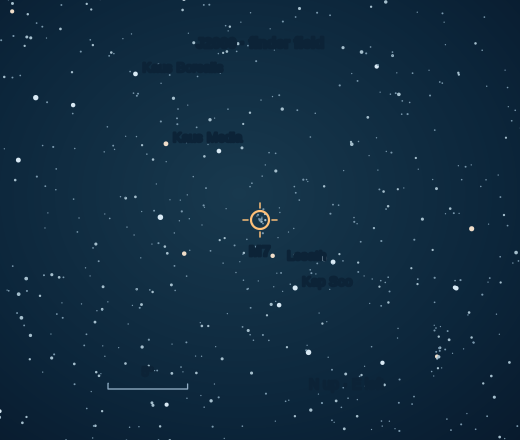
    On the north-up chart, start at Fuyue. The target lies about 2.4° north of it. Match the surrounding stars before changing magnification.

  3. Check the identification

    The catalogued long axis is 22.2 arcminutes. Keep a few field stars beyond the cluster in the eyepiece. Compare the density in the middle with the density near the edge.

Best telescope for viewing M7: Celestron StarSense Explorer DX 102AZ refractor — to keep the central concentration and outliers in one view. on Amazon

A closer look at M7

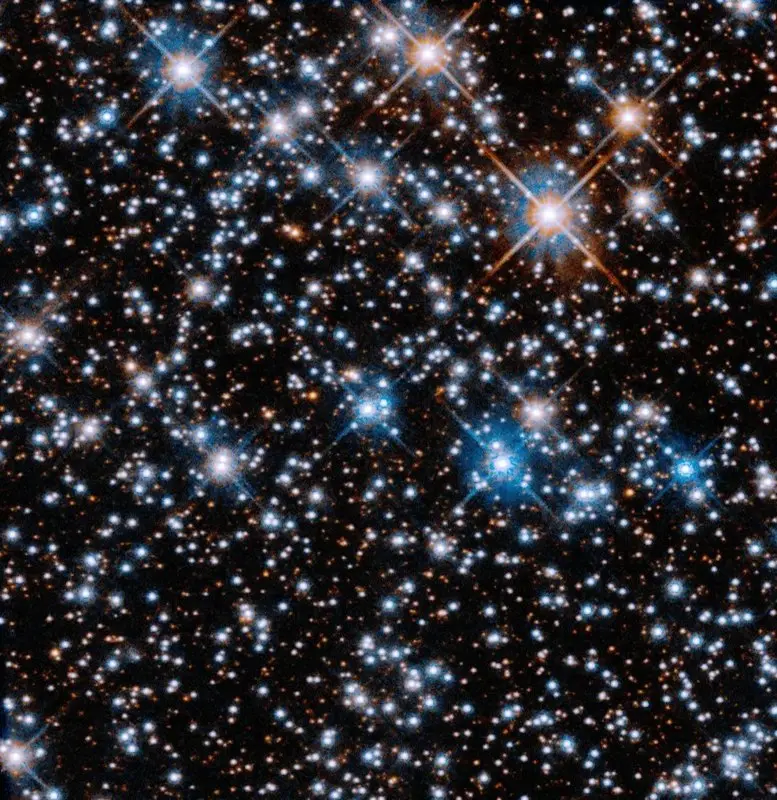
M7 gathers bright stars near the stinger of Scorpius. Its broad scatter is visible without optical aid from a dark, sufficiently southern site.

Ptolemy recorded the patch nearly two thousand years ago. We now recognize an open cluster whose stars were born from the same material.

Use binoculars to keep the whole cluster in view. Higher power can lose the recognizable pattern by filling the field with only a handful of members.

Want to learn more about Ptolemy’s Cluster? Messier 7 on Wikipedia.