

LIBRE TELESCOPE
Menu
Book Event

Sky Guide

Pollux

HIP 37826

Quick Stats

Name:
Pollux (HIP 37826)
Type:
Object
Observability:
Naked eye
Best telescope for viewing:
Use the naked eye for the named star. Binoculars can help identify it among the surrounding stars.

How to view HIP 37826

  1. Plan around meridian passage

    Try February 4–8, 2027. At its highest the field is about 84° above the horizon in Los Angeles and 70° in Seattle. Use your city’s meridian time for the best view.

  2. Find the field

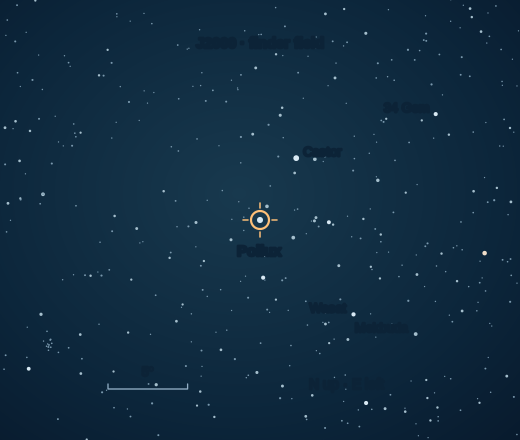
    On the north-up chart, start at Castor. The target lies about 4.5° southeast of it. Match the surrounding stars before changing magnification.

  3. What to look for

    Their different colors are visible even though the planet is far beyond the view.

A closer look at HIP 37826

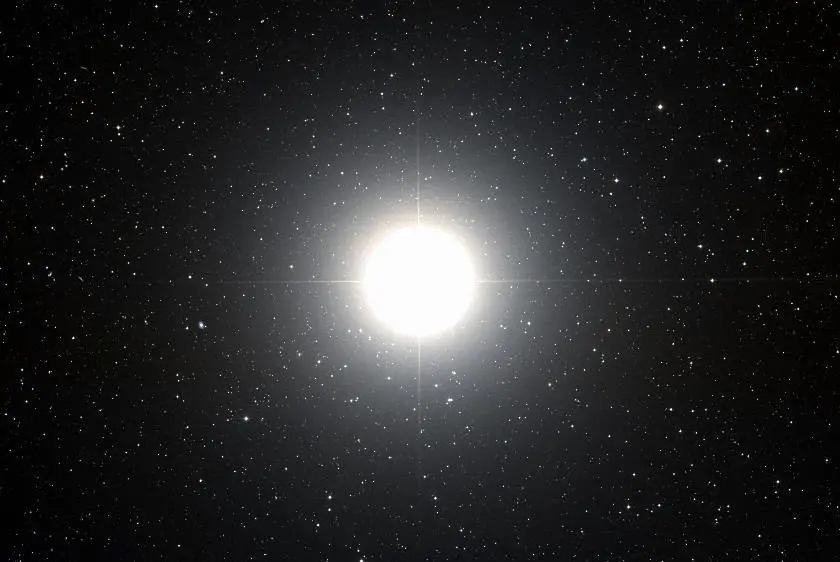
The brighter of Gemini’s celestial twins is an orange giant with a known giant planet. The planet revealed itself through the star’s slight orbital wobble.

At visual magnitude +1.16, Pollux stands out in Gemini. It lies roughly 4.5° southeast of Castor, a useful signpost when tracing the larger star pattern.

Stand back from the telescope and compare Pollux with neighboring Castor. Their different colors are visible even though the planet is far beyond the view.