

LIBRE TELESCOPE
Menu
Book Event

Sky Guide

NGC 7038 in Indus

Quick Stats

Name:
NGC 7038 in Indus
Type:
Object
Observability:
Difficult
Best telescope for viewing:
Sky-Watcher Classic 250P 10-inch Dobsonian — for the faint central condensation and the brighter part of the disk.

How to view NGC 7038 in Indus

  1. Check the southern horizon

    At its highest this field is 10° high from San Diego and below the horizon from Seattle. A site farther south gives a clearer view. At coastal latitudes, terrain and haze can conceal it even when it rises.

  2. Find the field

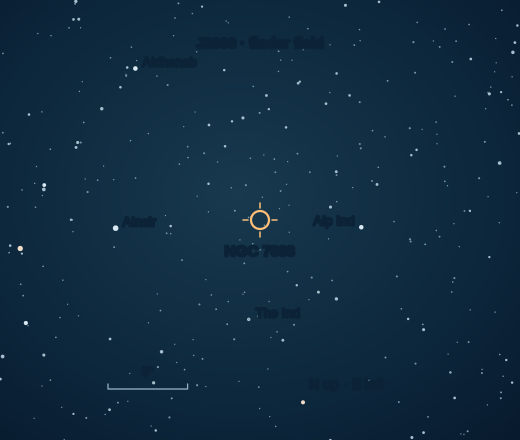
    On the north-up chart, start at Alnair. The target lies about 9.0° west of it. Match the surrounding stars before changing magnification.

  3. Check the identification

    The catalogued long axis is 3.22 arcminutes. Center the brighter core, then sketch which side of the elongated light is easiest to follow with averted vision.

Best telescope for viewing NGC 7038 in Indus: Sky-Watcher Classic 250P 10-inch Dobsonian — for the faint central condensation and the brighter part of the disk. on Amazon

A closer look at NGC 7038 in Indus

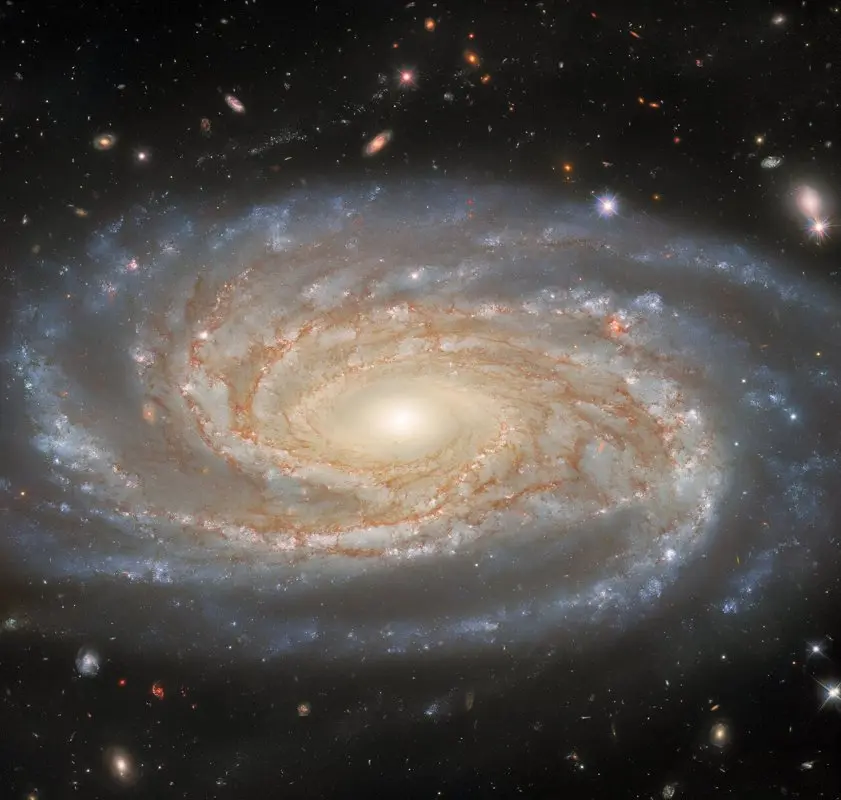
NGC 7038 has been observed at exceptional depth to improve distance measurements. Its relatively nearby spiral disk lets astronomers examine individual stellar populations that would merge into a haze farther away.

OpenNGC lists NGC 7038 at 3.2′ by 1.7′. The total visual magnitude is about 12.1. A slightly brighter background can erase the outer light before the center disappears.

Mark Alnair in the finder. A sweep of about 9.0° west brings the catalogue position into the field. A dark-adapted side glance helps separate the center from the fainter disk.

Want to learn more about NGC 7038 in Indus? NGC 7038 on Wikipedia.