

LIBRE TELESCOPE
Menu
Book Event

Sky Guide

NGC 278 in Cassiopeia

Quick Stats

Name:
NGC 278 in Cassiopeia
Type:
Object
Observability:
Intermediate
Best telescope for viewing:
Sky-Watcher Classic 200P 8-inch Dobsonian — to distinguish the galaxy’s central brightness and apparent shape under a dark sky.

How to view NGC 278 in Cassiopeia

  1. Plan around meridian passage

    Try October 27–31, 2027. At its highest the field is about 76° above the horizon in Los Angeles and 90° in Seattle. Use your city’s meridian time for the best view.

  2. Find the field

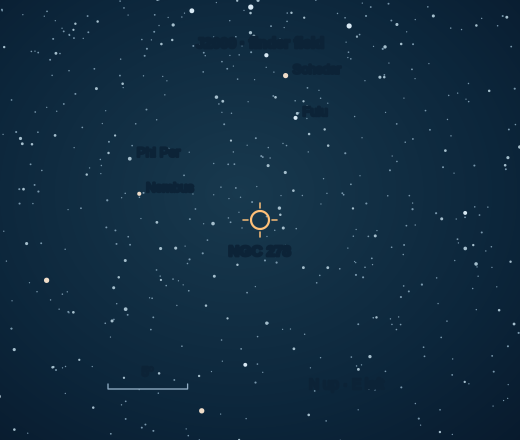
    On the north-up chart, start at Schedar. The target lies about 9.2° south of it. Match the surrounding stars before changing magnification.

  3. Check the identification

    The catalogued long axis is 2.36 arcminutes. Compare the central light with the field just outside it. Sketch the edge you can repeatedly recover with a side glance.

Best telescope for viewing NGC 278 in Cassiopeia: Sky-Watcher Classic 200P 8-inch Dobsonian — to distinguish the galaxy’s central brightness and apparent shape under a dark sky. on Amazon

A closer look at NGC 278 in Cassiopeia

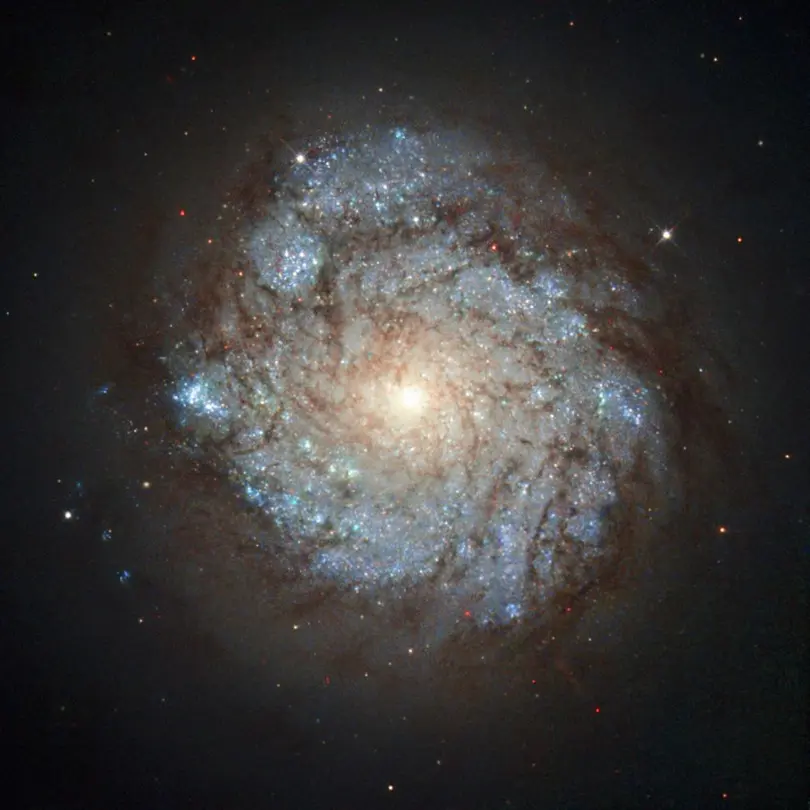
This small spiral is forming stars vigorously in its inner regions. Bright young populations stand out against the older, smoother light of the outer disk.

Trace the change in texture with distance from the center. The contrast between the two regions is part of the starburst’s signature.

On a north-up chart, NGC 278 lies about 6.8° south of Fulu. The catalogue gives an apparent size of 2.4′ × 2.3′. On a wide-field chart, NGC 185 in Cassiopeia lies about 2.3° from this target. Use an eyepiece with a wide field of view to match the surrounding pattern of stars to the finder chart.

Want to learn more about NGC 278 in Cassiopeia? NGC 278 on Wikipedia.