

LIBRE TELESCOPE
Menu
Book Event

Sky Guide

NGC 1624 in Perseus

Quick Stats

Name:
NGC 1624 in Perseus
Type:
Object
Observability:
Difficult
Best telescope for viewing:
Sky-Watcher Classic 250P 10-inch Dobsonian — for the dense core and the brighter individual member stars.

How to view NGC 1624 in Perseus

  1. Plan around meridian passage

    Try January 5–9, 2027. At its highest the field is about 74° above the horizon in Los Angeles and 87° in Seattle. Use your city’s meridian time for the best view.

  2. Find the field

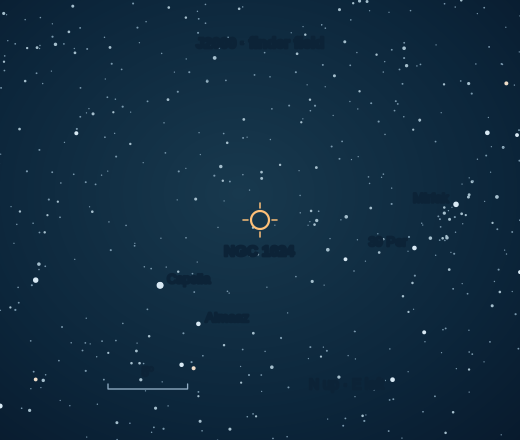
    On the north-up chart, start at Capella. The target lies about 7.5° northwest of it. Match the surrounding stars before changing magnification.

  3. Check the identification

    The catalogued long axis is 3 arcminutes. Keep a few field stars beyond the cluster in the eyepiece. Compare the density in the middle with the density near the edge.

Best telescope for viewing NGC 1624 in Perseus: Sky-Watcher Classic 250P 10-inch Dobsonian — for the dense core and the brighter individual member stars. on Amazon

A closer look at NGC 1624 in Perseus

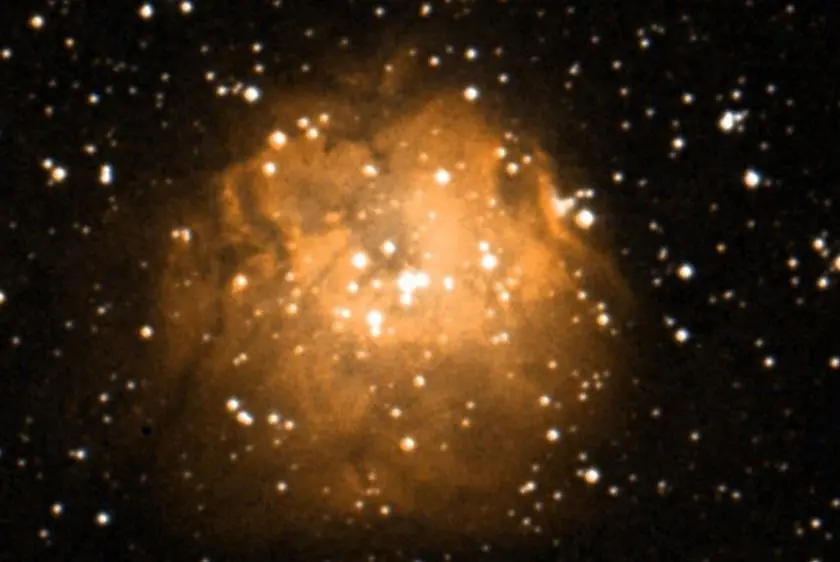
NGC 1624 combines a remote young cluster with the cloud it lights. One member, NGC 1624-2, is known for an exceptionally strong magnetic field among massive stars.

OpenNGC lists NGC 1624 at 3.0′ across. Compare the concentration in the middle with an equally large patch beside it. Unrelated foreground stars can be brighter than genuine members.

The target is about 7.5° northwest of Capella. Match the orientation of your eyepiece to the chart before starting the hop. Keep a few outlying stars in the field when sketching the group, so its scale is preserved.