

LIBRE TELESCOPE
Menu
Book Event

Sky Guide

NGC 1501 in Camelopardalis

Quick Stats

Name:
NGC 1501 in Camelopardalis
Type:
Object
Observability:
Difficult
Best telescope for viewing:
Sky-Watcher Classic 250P 10-inch Dobsonian — for the brightest part of the shell with an optional O III filter.

How to view NGC 1501 in Camelopardalis

  1. Plan around meridian passage

    Try December 7–11, 2026. At its highest the field is about 63° above the horizon in Los Angeles and 77° in Seattle. Use your city’s meridian time for the best view.

  2. Find the field

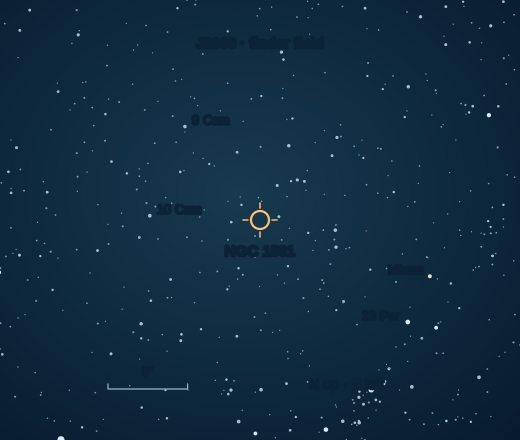
    On the north-up chart, start at Mirfak. The target lies about 12.6° northeast of it. Match the surrounding stars before changing magnification.

  3. Check the identification

    The catalogued long axis is 0.87 arcminutes. Compare the suspect object with a nearby star at the same focus, then raise the power to check for a disk or shell.

Best telescope for viewing NGC 1501 in Camelopardalis: Sky-Watcher Classic 250P 10-inch Dobsonian — for the brightest part of the shell with an optional O III filter. on Amazon

A closer look at NGC 1501 in Camelopardalis

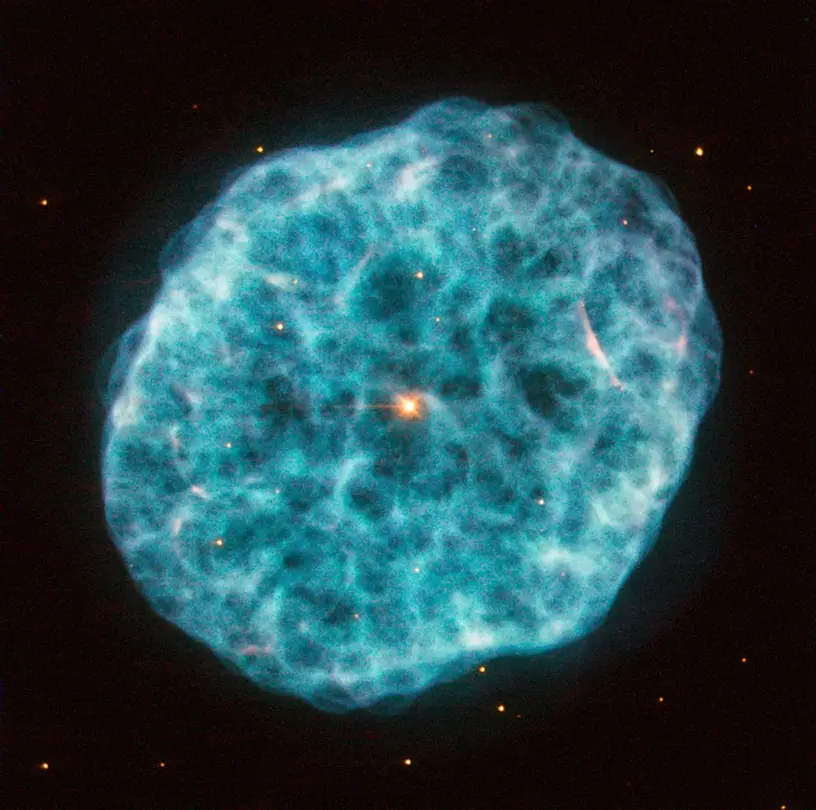
NGC 1501 surrounds a pulsating central star. Its uneven, bubble-like shell has prompted the nickname Oyster Nebula, with the hot star as the pearl.

Look for the round outer glow first. The star at the center is a different observing challenge from detecting the shell.

On a north-up chart, NGC 1501 lies about 11.1° northeast of Miram. Allow for a catalogue size of 52″ across when choosing the eyepiece field. On a wide-field chart, NGC 1502 in Camelopardalis lies about 1.4° from this target.

Want to learn more about NGC 1501 in Camelopardalis? NGC 1501 on Wikipedia.