

LIBRE TELESCOPE
Menu
Book Event

Sky Guide

Mira

HIP 10826

Quick Stats

Name:
Mira (HIP 10826)
Type:
Object
Observability:
Naked eye
Best telescope for viewing:
Celestron Cometron 7×50 binoculars — to follow the variable on the brighter part of its cycle. Faint minima need a telescope.

How to view HIP 10826

  1. Plan around meridian passage

    Try Around a bright maximum. At its highest the field is about 53° above the horizon in Los Angeles and 39° in Seattle. Use your city’s meridian time for the best view.

  2. Find the field

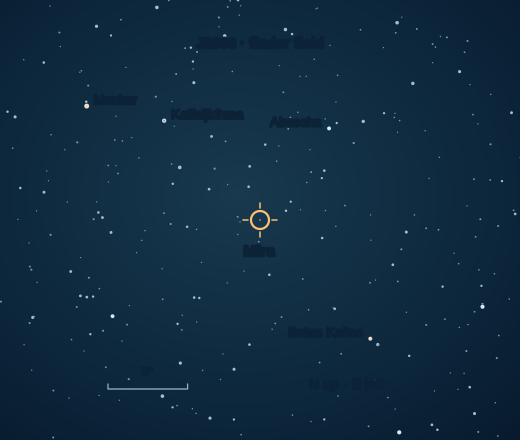
    On the north-up chart, start at Menkar. The target lies about 12.8° southwest of it. Match the surrounding stars before changing magnification.

  3. What to look for

    Compare Mira against neighboring stars on a sequence of clear nights and record the date of every estimate.

Best telescope for viewing HIP 10826: Celestron Cometron 7×50 binoculars — to follow the variable on the brighter part of its cycle. Faint minima need a telescope. on Amazon

A closer look at HIP 10826

Mira can go from a conspicuous star to one that takes a telescope to recover. Its pulsations make it a namesake for a whole class of variable stars.

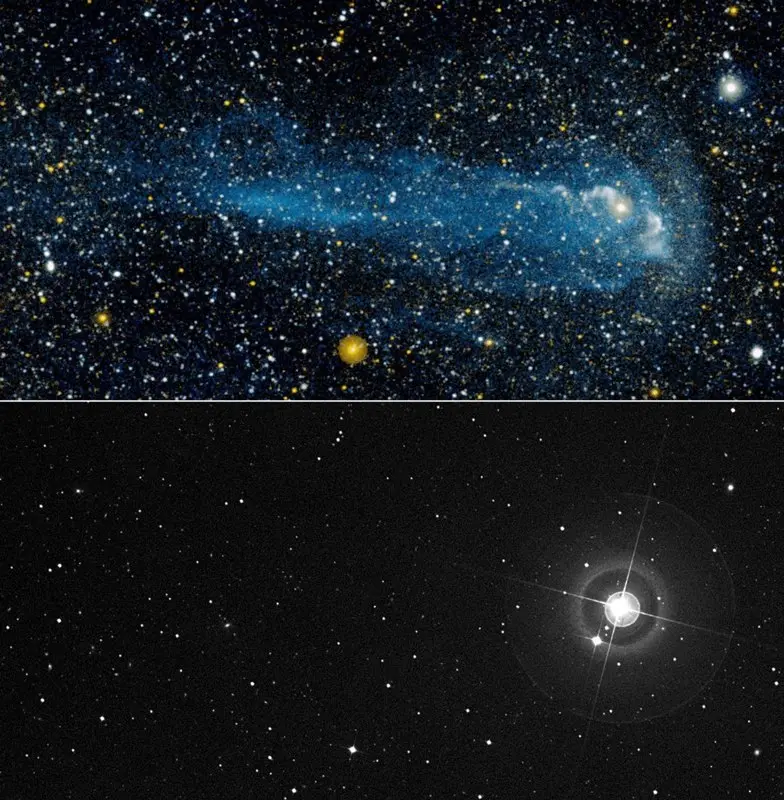
In ultraviolet light the aging star trails a long wake as its shed material passes through interstellar space. The tail is invisible to the human eye.

The naked-eye rating applies near maximum brightness. Compare Mira against neighboring stars on a sequence of clear nights and record the date of every estimate. On a wide-field chart, NGC 1022 in Cetus lies about 6.0° from this target. The apparent magnitude scale describes how bright a star looks from Earth.