

LIBRE TELESCOPE
Menu
Book Event

Sky Guide

Messier A Crater

Quick Stats

Name:
Messier A Crater
Type:
Object
Observability:
Intermediate
Best telescope for viewing:
Celestron NexStar 127SLT Maksutov — for the outline and interior detail at moderate to high power.

How to view Messier A Crater

  1. Choose the illumination

    Try December 21–24, 2026 when the waxing-to-full Moon favors bright rays and albedo patterns. Check local moonrise and choose a time when the disk has climbed clear of the horizon.

  2. Locate the feature

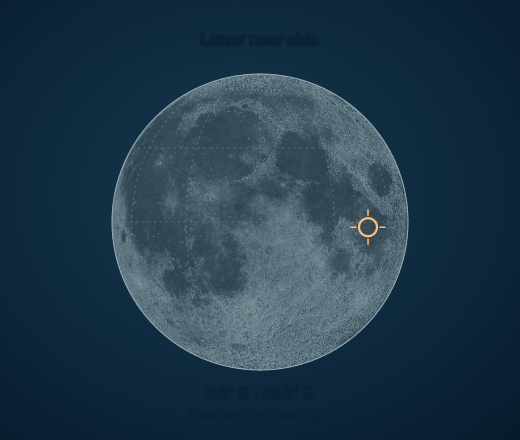
    On a lunar atlas, mark 2.0° S / 46.9° E. Orient the lunar disk in the finder, then move from the nearest broad dark plain or bright crater to Messier A Crater.

  3. Study the detail

    High sunlight favors brightness markings even after it has washed out the crater shadows.

Best telescope for viewing Messier A Crater: Celestron NexStar 127SLT Maksutov — for the outline and interior detail at moderate to high power. on Amazon

A closer look at Messier A Crater

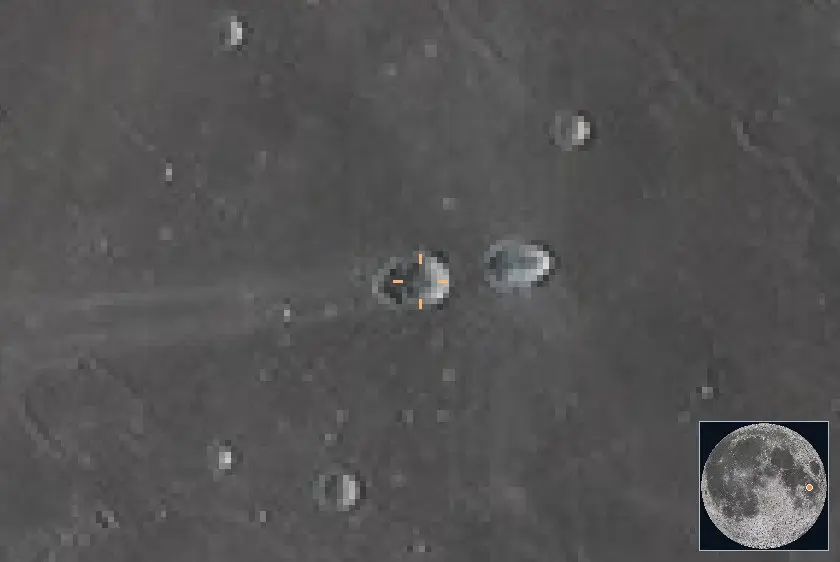
Two nearly parallel rays stretch westward from the vicinity of Messier A across a dark lava plain. They make the smaller crater pair resemble a comet in lunar images.

The IAU catalogue gives 11 km for its extent. As a scale reference, the crater Taruntius is centered about 229 km away to the north.

Follow the rays back toward their eastern source. High sunlight favors brightness markings even after it has washed out the crater shadows. Low sunlight near the lunar terminator makes shallow ridges and crater walls cast long shadows.

Want to learn more about Messier A Crater? Messier (crater) on Wikipedia.